
Ecommerce Optimization Terms: Unlocking Higher Conversions
Running a Shopify store often means searching for proven ways to turn more visitors into buyers without getting lost in technical details. For many store owners, understanding ecommerce optimization feels overwhelming, even though it can make a real difference in daily sales. By exploring simple, AI-powered A/B testing solutions, you gain practical methods to refine your shop, boost conversion rates, and compete globally—even if you are new to digital optimization strategies.
Table of Contents
- Defining Ecommerce Optimization Terms Clearly
- Types Of Optimization In Ecommerce
- Key Metrics And Their Meanings
- How A/B Testing Powers Growth
- Avoiding Common Ecommerce Optimization Mistakes
Key Takeaways
| Point | Details |
|---|---|
| Ecommerce Optimization Importance | Systematic enhancements of website elements can significantly boost sales and conversion rates through a data-driven approach. |
| Role of SEO | Optimizing website content with relevant keywords improves visibility and potential customer attraction. |
| Key Metrics | Tracking performance metrics like conversion rate and average order value is essential for informed decision-making and strategy adjustments. |
| A/B Testing Benefits | Systematic A/B testing allows businesses to refine their marketing strategies and user experiences based on empirical data, leading to improved performance. |
Defining Ecommerce Optimization Terms Clearly
Ecommerce optimization represents a strategic approach to improving online store performance by systematically enhancing various digital elements that impact customer experience and conversion rates. At its core, optimization involves analyzing and refining multiple aspects of an online shopping environment to maximize sales potential. These processes require deep understanding of user behavior, website functionality, and targeted improvements.
Key optimization strategies often focus on critical areas like site speed, user interface design, product presentation, and conversion funnel analysis. Digital commerce experts recognize that small adjustments can yield significant results – something confirmed by the U.S. Bureau of Economic Analysis research on digital economy measurement. The fundamental goal is transforming website visitors into paying customers through strategic, data-driven enhancements.
Search engine optimization (SEO) plays a crucial role in ecommerce optimization. By structuring website content strategically, businesses can improve online visibility and attract more potential customers. This involves optimizing product descriptions, implementing relevant keywords, ensuring mobile responsiveness, and creating compelling metadata that helps search engines understand and rank product pages effectively.
Pro Tip: Conduct monthly audits of your ecommerce site to identify optimization opportunities, tracking key performance indicators like bounce rate, conversion rate, and average session duration to guide your improvement strategy.
Types Of Optimization In Ecommerce
Ecommerce optimization encompasses multiple strategic approaches designed to improve online store performance and drive higher conversion rates. These optimization types range from technical improvements to marketing-driven enhancements that collectively transform digital shopping experiences. Understanding the diverse optimization strategies allows businesses to create more targeted, effective online retail environments.

One critical optimization type focuses on promotion strategies, which involve sophisticated data-driven techniques to maximize customer engagement and sales potential. Retail promotion optimization demonstrates how businesses can transition from intuition-based decisions to algorithmic approaches that consider complex cross-item effects and customer behavior patterns. By analyzing promotional constraints and potential outcomes, companies can design more intelligent marketing interventions that directly impact conversion rates.
Additionally, ecommerce optimization includes diverse approaches across different website types. Ecommerce platform variations require unique optimization strategies tailored to specific site structures. Transactional sites might prioritize checkout flow improvements, while informational content sites could focus more on SEO and engagement metrics. Marketplace platforms, by contrast, often need complex optimization strategies addressing multiple vendor experiences and intricate backend integrations.
Pro Tip: Develop a comprehensive optimization roadmap that systematically addresses different optimization types, prioritizing changes based on potential impact and implementation complexity.
Here’s a comparison of key ecommerce optimization types and their business impact:
| Optimization Type | Main Focus | Example Enhancement | Business Impact |
|---|---|---|---|
| Technical Improvements | Site speed, checkout flow | Faster page loads | Reduces abandonment, boosts sales |
| Marketing-Driven Enhancements | Promotions, targeting | Algorithmic coupon offers | Increases conversion rates |
| Platform-Specific Strategies | Platform adaptability | Marketplace vendor tools | Improves user satisfaction |
Key Metrics And Their Meanings
Ecommerce performance hinges on understanding and tracking critical metrics that reveal the health and effectiveness of online businesses. These key performance indicators (KPIs) provide granular insights into customer behavior, sales performance, and overall digital strategy success. By comprehensively analyzing these metrics, businesses can make data-driven decisions that directly impact revenue and growth.

Marketing performance indicators represent crucial signposts across the customer journey, mapping critical stages from initial awareness to final purchase. Fundamental metrics include website traffic, which measures visitor volume, conversion rates tracking the percentage of visitors completing desired actions, and average order value demonstrating the economic impact of each customer interaction. These indicators help businesses understand not just how many customers arrive, but how effectively they are being converted and monetized.
Ecommerce sales metrics provide deeper strategic context for performance evaluation. Official ecommerce sales data from government sources reveal industry-wide trends and individual business performance benchmarks. Key metrics like total online sales, quarter-over-quarter growth rates, and ecommerce penetration within total retail sales offer comprehensive views of market dynamics. Tracking these indicators allows businesses to position themselves strategically, understanding their performance relative to broader market movements and identifying opportunities for optimization.
Pro Tip: Create a dynamic dashboard that aggregates your most critical ecommerce metrics, updating in real-time to provide immediate insights into store performance and emerging trends.
The table below summarizes essential ecommerce metrics and what each reveals about performance:
| Metric | What It Measures | Business Insight |
|---|---|---|
| Conversion Rate | Percentage of visitors buying | Effectiveness of website in sales |
| Average Order Value | Average money per sale | Customer spending behavior |
| Bounce Rate | Percent leaving instantly | Site relevance for visitors |
| Traffic Volume | Total site visits | Overall reach and visibility |
How A/B Testing Powers Growth
A/B testing represents a powerful methodological approach that enables ecommerce businesses to systematically improve their online performance through controlled experimentation. By comparing two distinct versions of a webpage, marketing element, or user interface, businesses can make data-driven decisions that incrementally enhance conversion rates and customer experience. This scientific approach transforms guesswork into strategic optimization.
Marketing effectiveness research reveals how A/B testing provides rigorous insights into user behavior and preference. Typical testing scenarios involve comparing different headlines, button colors, page layouts, or product descriptions to determine which variant generates superior results. By isolating specific elements and measuring their individual impact, businesses can understand precisely what motivates customer interactions and purchasing decisions.
Post-pandemic ecommerce strategies have increasingly embraced A/B testing as a critical tool for adaptation and growth. Iterative testing approaches allow businesses to rapidly respond to changing consumer behaviors, continuously refining their digital experiences. Successful A/B testing goes beyond simple website modifications, encompassing complex experiments that explore nuanced aspects of user engagement, from checkout process design to personalized product recommendations.
Pro Tip: Develop a systematic A/B testing calendar that prioritizes experiments based on potential revenue impact, ensuring consistent, strategic optimization of your ecommerce platform.
Avoiding Common Ecommerce Optimization Mistakes
Ecommerce optimization requires strategic thinking and systematic approaches to avoid common pitfalls that can derail digital performance. Many online businesses inadvertently compromise their growth potential by repeating predictable errors that limit conversion rates and customer engagement. Recognizing and proactively addressing these mistakes becomes crucial for sustainable online success.
Ecommerce marketing strategies reveal that businesses frequently fail by relying too heavily on intuition rather than data-driven insights. Common mistakes include neglecting comprehensive marketing frameworks, failing to segment customer experiences, and applying generic strategies without considering unique business contexts. Successful optimization demands a nuanced understanding of individual customer journeys and precise, targeted interventions.
Change management principles further illuminate critical optimization errors. Business transformation strategies highlight systemic issues like poor communication, insufficient stakeholder engagement, and inadequate planning. In ecommerce contexts, these translate to challenges such as inconsistent user experiences, poorly integrated optimization tools, and reactive instead of proactive improvement methodologies. Businesses must develop holistic, adaptive approaches that continuously refine digital performance based on real-world data and customer feedback.
Pro Tip: Implement a quarterly optimization audit that critically examines your ecommerce performance, identifying potential improvement areas and systematically addressing optimization gaps.
Unlock Higher Conversions with AI-Powered Ecommerce Optimization
The article highlights how mastering ecommerce optimization terms like A/B testing and conversion rates is essential for boosting online sales. If you are struggling with technical improvements or marketing-driven enhancements, or if you want to control key metrics like bounce rate and average order value without coding skills, Automagic.li offers a perfect solution. Our AI-powered platform simplifies complex optimizations by delivering ready-made, high-impact A/B tests designed specifically for Shopify stores.
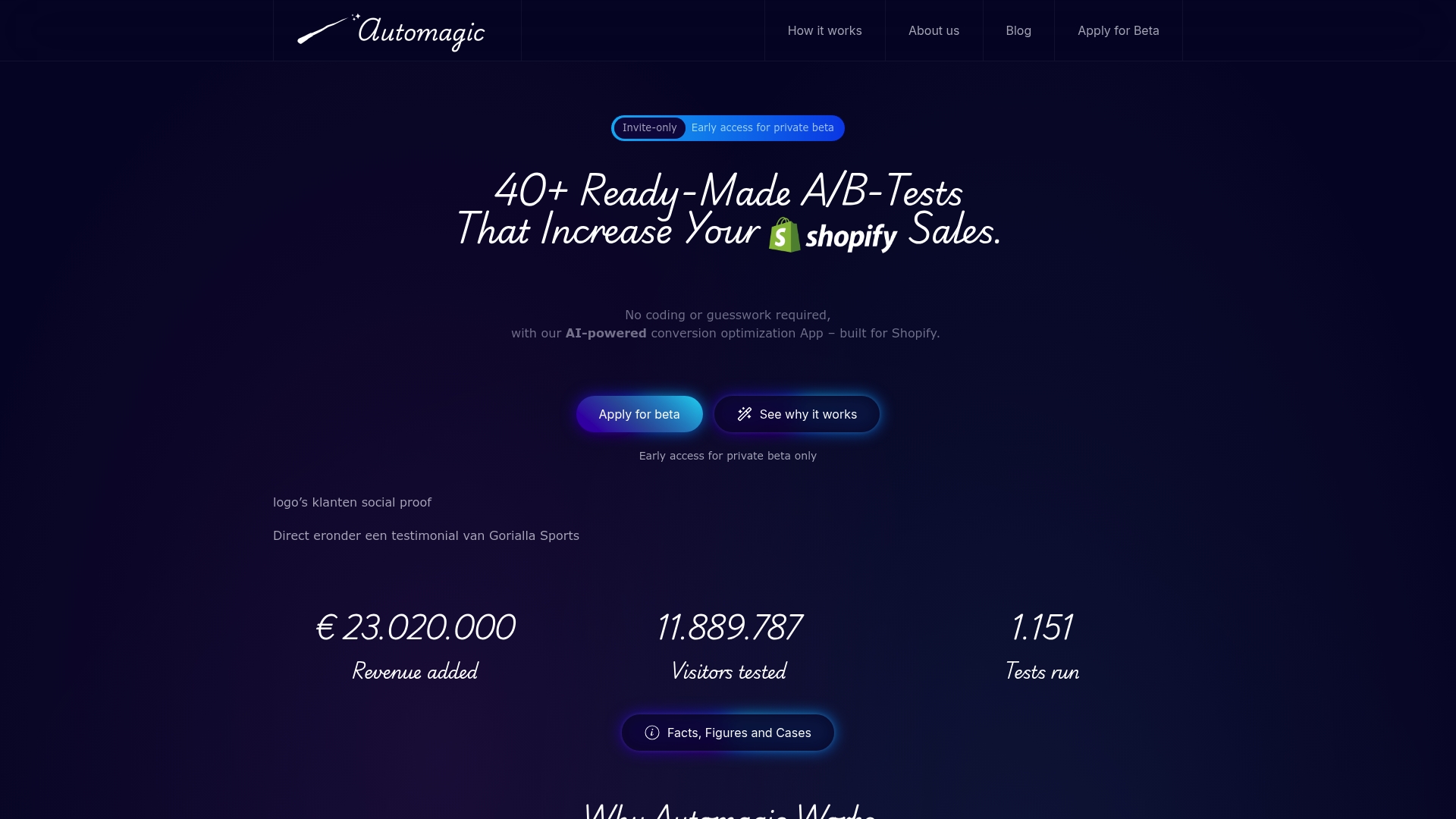
Stop guessing and start growing now. Automagic.li automates personalized test deployment, saving you time and money while increasing conversions. Discover how easy it is to transform your ecommerce strategy by exploring our landing page and learning more about AI-driven optimization techniques. Take control of your store’s future and unlock higher conversions today.
Frequently Asked Questions
What is ecommerce optimization?
Ecommerce optimization is a strategy focused on improving the performance of online stores by enhancing various digital elements that impact customer experience and conversion rates.
How can I track the effectiveness of ecommerce optimization efforts?
You can track effectiveness by monitoring key performance indicators (KPIs) such as conversion rate, average order value, bounce rate, and website traffic to assess your online store’s performance.
What are common types of ecommerce optimization strategies?
Common types include technical improvements (like site speed and checkout flow), marketing-driven enhancements (such as targeted promotions), and platform-specific strategies tailored to different online shopping environments.
How does A/B testing contribute to ecommerce optimization?
A/B testing allows businesses to compare two versions of a webpage or marketing element to determine which performs better, helping to make data-driven decisions that enhance conversion rates and user experience.