
Shopify Optimization: Boosting Store Sales With AI
Most American entrepreneurs running Shopify stores face a tough reality: even a small increase in conversion rates can mean thousands of dollars saved or earned each month. When technical know-how is limited, finding clear solutions that actually work often feels overwhelming. This article unpacks proven strategies and simple concepts designed for busy store owners seeking measurable results without getting lost in complex details or expensive developer contracts.
Table of Contents
- Defining Shopify Optimization And Core Concepts
- AI-Powered A/B Testing: How It Works For Stores
- Types Of Store Optimization: From UX To Checkout
- Leveraging Pre-Tested Variations And Impact Data
- Risks, Costs, And Mistakes In Shopify Optimization
- Comparing DIY, Developer, And SaaS Optimization Tools
Key Takeaways
| Point | Details |
|---|---|
| Shopify Optimization Focus | Prioritize enhancing user experience, product pages, and checkout processes to increase conversion rates. |
| AI-Powered A/B Testing | Utilize AI-driven testing for efficient experimentation that provides actionable insights into user behavior and preferences. |
| Types of Optimization | Implement a holistic strategy covering UX, product pages, checkout processes, and performance to create a seamless shopping experience. |
| Approaches to Optimization Tools | Evaluate DIY, developer solutions, and SaaS platforms based on your needs to select the most effective optimization tools for your store. |
Defining Shopify Optimization and Core Concepts
Shopify optimization represents a strategic approach to systematically improving an online store’s performance through data-driven techniques designed to enhance user experience and increase conversion rates. At its core, this process involves analyzing multiple elements of an ecommerce website to identify opportunities for improvement, ultimately driving more sales and revenue.
The fundamental goal of Shopify optimization involves transforming website visitors into paying customers by strategically refining key elements like product pages, checkout processes, and overall site navigation. Advanced AI technologies are increasingly being integrated into optimization strategies to provide deeper insights and more precise improvements. These AI-powered solutions can quickly analyze user behavior patterns, recommend targeted modifications, and help store owners make informed decisions about website design and functionality.
Key components of effective Shopify optimization typically include:
- Conversion rate analysis
- User experience (UX) design improvements
- Page load speed enhancements
- Mobile responsiveness tracking
- A/B testing of critical site elements
- Performance metric monitoring
By implementing a comprehensive optimization strategy, Shopify store owners can systematically improve their online presence, creating a more intuitive and engaging shopping experience that directly translates into increased sales and customer satisfaction.
Pro Tip: Prioritize continuous testing and incremental improvements rather than attempting massive overhauls, as small, data-driven changes often yield the most significant and sustainable results.
AI-Powered A/B Testing: How It Works for Stores
AI-powered A/B testing represents a revolutionary approach for Shopify store owners to optimize website performance through intelligent, data-driven experimentation. This advanced methodology goes beyond traditional testing by leveraging artificial intelligence to analyze complex user interactions, predict outcomes, and generate statistically significant insights that can dramatically improve conversion rates.
Advanced machine learning algorithms are transforming online controlled experiments by enabling more nuanced and dynamic testing strategies. These sophisticated systems can simultaneously evaluate multiple website variables, such as product page layouts, pricing structures, and checkout processes, while automatically identifying the most impactful modifications. The AI technology continuously learns from each test, refining its understanding of user behavior and making increasingly precise recommendations for store optimization.
Key components of AI-powered A/B testing for Shopify stores include:
- Intelligent variant generation
- Real-time performance tracking
- Predictive statistical modeling
- Automated significance calculation
- User behavior pattern recognition
- Personalization recommendation engines
By implementing AI-driven A/B testing, Shopify store owners can move beyond traditional trial-and-error approaches, gaining deep insights into customer preferences and creating data-backed improvements that directly translate into increased sales and enhanced user experiences.
Pro Tip: Select AI testing tools that provide clear, actionable insights and prioritize platforms offering transparent explanations of their recommendation algorithms to ensure meaningful optimization strategies.
Types of Store Optimization: From UX to Checkout
Shopify store optimization encompasses a comprehensive approach to improving online retail performance, targeting multiple critical areas that directly impact customer experience and conversion rates. From the initial user interface design to the final checkout process, each optimization strategy plays a crucial role in transforming website visitors into loyal customers.

Advanced e-commerce optimization techniques leverage sophisticated controlled experiment methodologies to systematically analyze and enhance different aspects of online stores. These strategies focus on creating seamless, intuitive experiences that guide customers effortlessly from product discovery to purchase completion, addressing potential friction points throughout the shopping journey.
Key types of Shopify store optimization include:
- User Experience (UX) Optimization
- Intuitive navigation design
- Responsive mobile interfaces
- Clear product information presentation
- Product Page Enhancement
- High-quality product imagery
- Compelling product descriptions
- Social proof integration
- Checkout Process Optimization
- Simplified form designs
- Multiple payment options
- Trust signal implementations
- Performance Optimization
- Faster page load times
- Reduced bounce rates
- Improved server response speeds
By implementing a holistic approach to store optimization, Shopify entrepreneurs can create more engaging, efficient, and customer-friendly online shopping experiences that directly translate into increased sales and improved customer satisfaction.
Below is a summary of optimization focus areas and their measurable business impacts:
| Focus Area | Typical Goal | Expected Business Impact |
|---|---|---|
| User Experience (UX) | Improve usability | Higher engagement, lower bounces |
| Product Page Design | Showcase products effectively | Increased product views, higher cart additions |
| Checkout Optimization | Simplify purchase process | Reduced abandonment, more transactions |
| Performance Enhancement | Speed up website loading | Lower bounce rate, improved SEO |
Pro Tip: Prioritize incremental improvements and continuously monitor user behavior metrics, focusing on small, data-driven changes that collectively create significant performance enhancements.
Leveraging Pre-Tested Variations and Impact Data
Pre-tested variations represent a powerful strategy for Shopify store owners to implement data-driven improvements without extensive experimentation. These meticulously researched design and functionality modifications provide a shortcut to optimization, allowing entrepreneurs to benefit from proven strategies that have demonstrated success across similar online retail environments.
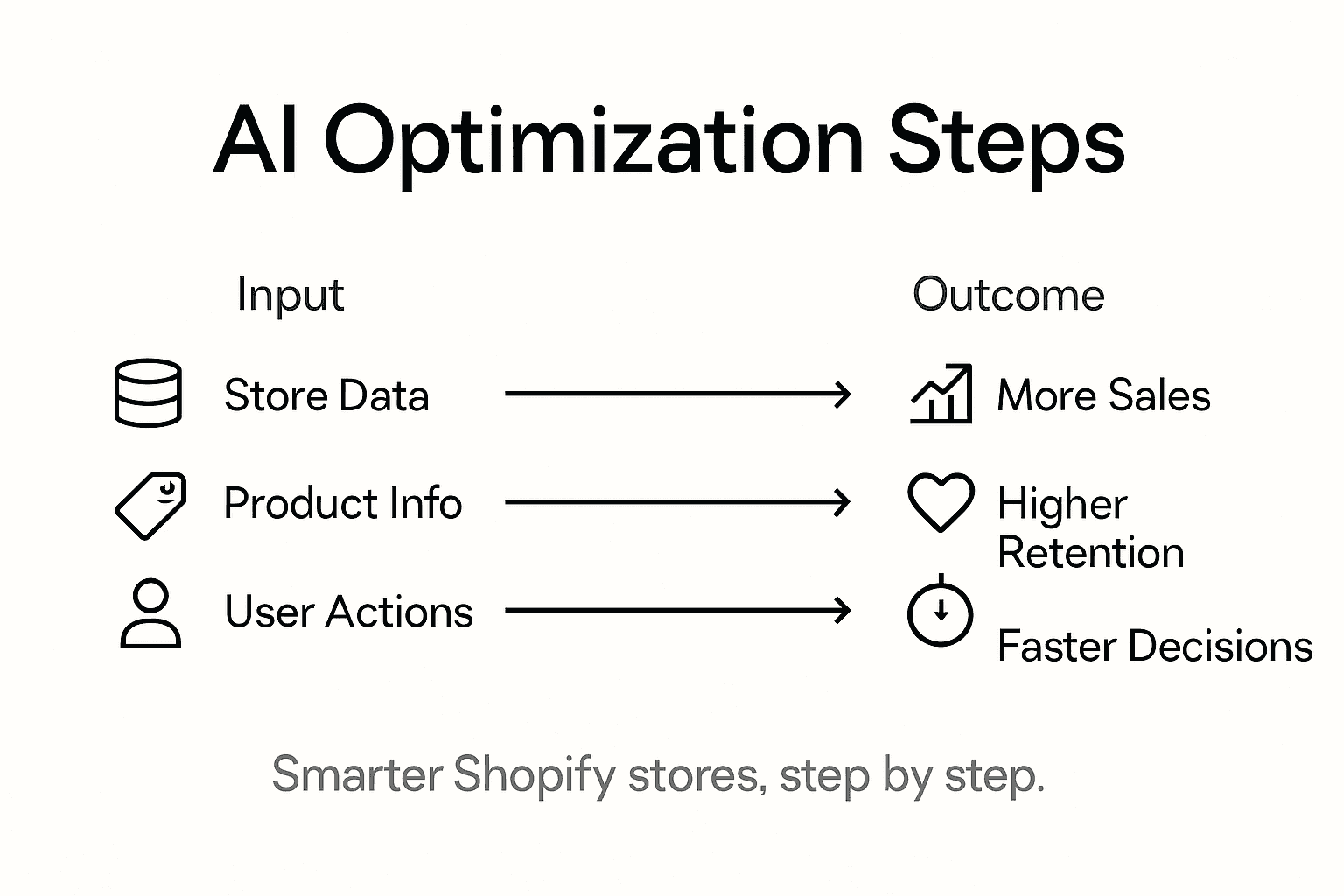
Advanced controlled experiments in e-commerce reveal critical insights into performance optimization by systematically analyzing multiple design variations and their impact on user behavior. By leveraging pre-tested variations, store owners can quickly implement changes that have already been validated through extensive research, reducing the risk and time associated with traditional trial-and-error approaches.
Key characteristics of effective pre-tested variations include:
- Statistical Significance
- Proven performance improvements
- Validated across multiple store types
- Measurable conversion rate increases
- Targeted Optimization Areas
- Product page layouts
- Checkout process design
- Navigation structure
- Call-to-action placement
- Impact Categories
- Minimal impact modifications
- Moderate performance boosters
- High-conversion transformations
Successful implementation of pre-tested variations requires a strategic approach that considers the unique characteristics of individual Shopify stores while drawing insights from broader e-commerce performance data. This method allows store owners to make informed decisions backed by empirical evidence rather than relying on subjective design choices.
Pro Tip: Prioritize pre-tested variations with documented performance metrics and select modifications that align closely with your specific store’s target audience and product category.
Risks, Costs, and Mistakes in Shopify Optimization
Shopify store optimization can be a complex journey fraught with potential pitfalls that can significantly impact business performance and financial outcomes. Understanding these risks is crucial for entrepreneurs seeking to improve their online stores without encountering costly mistakes that could derail their growth strategies.
Advanced e-commerce research highlights the complex challenges of online optimization experiments, revealing that poorly implemented changes can lead to unintended negative consequences. These challenges underscore the importance of a methodical, data-driven approach to store improvements, rather than relying on intuition or random modifications.
Common risks and mistakes in Shopify optimization include:
- Strategic Errors
- Implementing changes without proper data validation
- Overlooking mobile user experience
- Ignoring customer feedback
- Technical Risks
- Incompatible plugin integrations
- Slow page load times
- Broken checkout processes
- Financial Considerations
- Unnecessary optimization tool subscriptions
- High development costs
- Potential revenue loss during testing
- Performance Pitfalls
- Inconsistent brand messaging
- Overcomplicated navigation
- Misaligned conversion strategies
Successful Shopify optimization requires a balanced approach that carefully weighs potential risks against expected benefits, ensuring that each modification is strategically planned and thoroughly tested before full implementation.
Pro Tip: Conduct small-scale, incremental tests and continuously monitor performance metrics to minimize financial risks and validate the impact of each optimization attempt.
Comparing DIY, Developer, and SaaS Optimization Tools
Shopify store owners face critical decisions when selecting optimization tools, with three primary approaches emerging: do-it-yourself (DIY) methods, traditional developer solutions, and modern Software-as-a-Service (SaaS) platforms. Each approach offers distinct advantages and challenges that can significantly impact a store’s performance and growth potential.
Advanced controlled experiments in e-commerce highlight the evolving landscape of optimization technologies, revealing that AI-powered SaaS solutions are increasingly outperforming traditional optimization methods. These emerging platforms provide more sophisticated, data-driven approaches that can quickly analyze and implement improvements without requiring extensive technical expertise.
Comparative analysis of optimization approaches:
Here’s a comparison of common Shopify optimization tool approaches and how they differ:
| Approach | Best For | Main Drawback | Typical Cost Range |
|---|---|---|---|
| DIY Optimization | Budget-conscious owners | Slow learning curve | Minimal to moderate |
| Developer Solutions | Custom, unique store needs | High upfront costs | Hundreds to thousands |
| SaaS Optimization Tools | Fast, scalable improvements | Limited deep customization | Monthly subscription |
- DIY Optimization
- Low initial cost
- High personal time investment
- Limited analytical capabilities
- Steep learning curve
- Developer Solutions
- Custom implementation
- Expensive hourly rates
- Specialized technical expertise
- Slow iteration cycles
- SaaS Optimization Platforms
- Quick implementation
- Automated testing
- Scalable solutions
- Continuous performance tracking
- Affordable monthly subscriptions
Successful Shopify store optimization requires carefully evaluating these approaches based on individual business needs, technical capabilities, and strategic goals. The most effective solution often combines elements from multiple approaches to create a comprehensive optimization strategy.
Pro Tip: Prioritize SaaS platforms that offer transparent performance metrics, provide easy integration, and demonstrate proven track records of improving conversion rates across similar online stores.
Unlock Higher Shopify Sales with AI-Powered Optimization
The article highlights how Shopify store owners often struggle with complex, time-consuming testing processes and the risks of uninformed changes that harm conversion rates. The challenge lies in implementing strategic, data-driven improvements without technical hurdles or expensive developer costs. Pain points such as slow A/B testing, difficulty interpreting analytics, and fear of revenue loss are common barriers to success. Using AI-powered A/B testing and proven pre-tested variations can transform these challenges into opportunities for predictable, measurable sales growth.
At Automagic.li, we understand these hurdles and have built a SaaS platform that democratizes Shopify optimization by delivering over 40 high-impact pre-tested test variations tailored specifically for Shopify stores. Our AI technology automatically adapts tests to your unique store design, eliminating the need for coding or developers while ensuring continuous, data-driven improvements in user experience and checkout efficiency. This aligns perfectly with the article’s emphasis on AI-driven experimentation, rapid iteration, and minimizing risks.
Upgrade your Shopify store now and experience hassle-free optimization that turns visitors into loyal customers. Visit Automagic.li today to unlock a smart path to higher conversions through AI-powered testing and proven strategies.
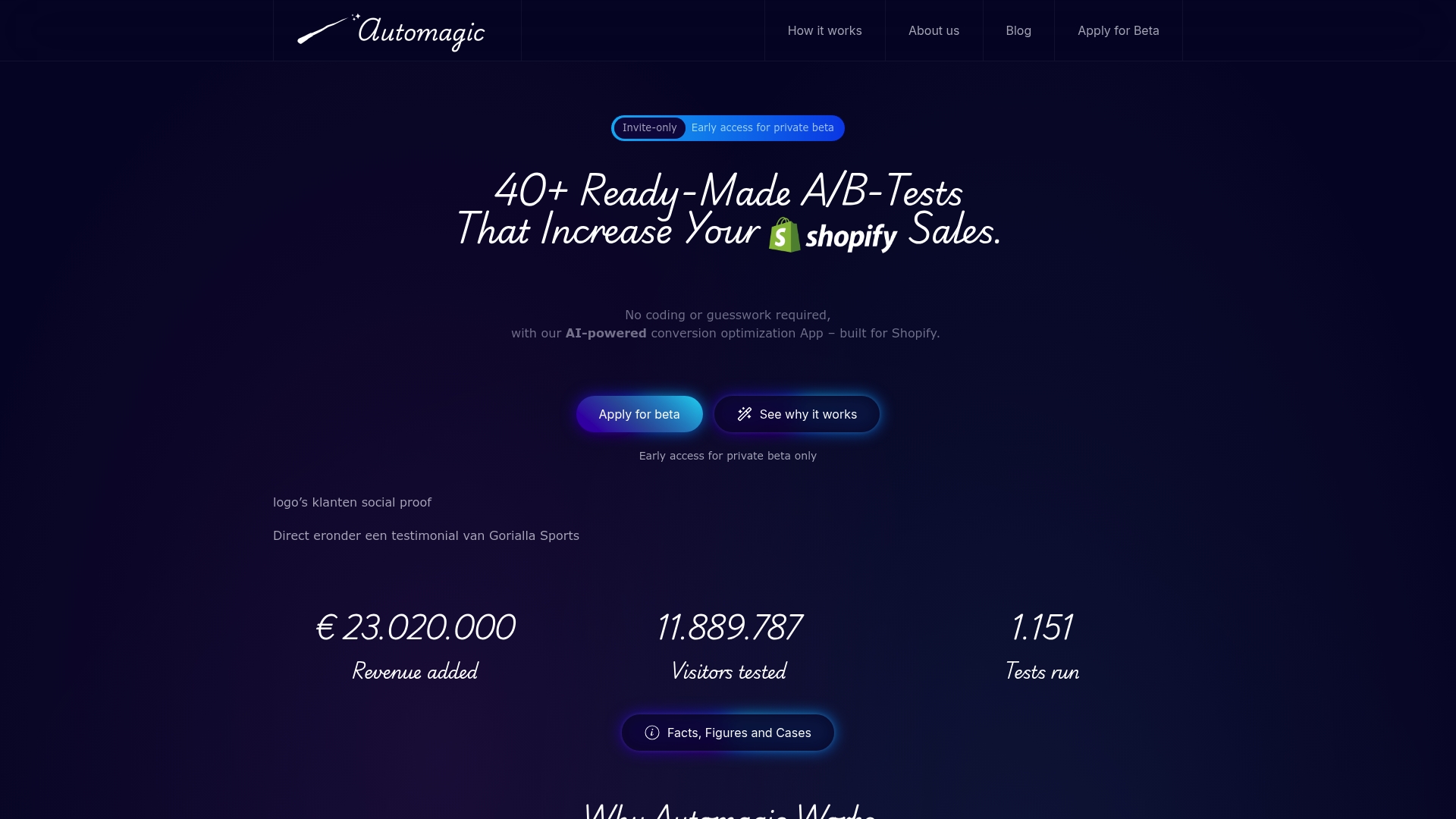
Ready to boost your store’s performance with cutting-edge AI optimization? Explore how effortless and effective Shopify growth can be by getting started at Automagic.li right now and watch your sales soar.
Frequently Asked Questions
What is Shopify optimization?
Shopify optimization is a strategic approach to enhancing an online store’s performance by improving user experience, increasing conversion rates, and ultimately driving more sales through data-driven techniques.
How does AI-powered A/B testing enhance Shopify store optimization?
AI-powered A/B testing utilizes machine learning algorithms to analyze user interactions, predict outcomes, and provide actionable insights for optimizing different website elements, leading to improved conversion rates.
What are the key areas to focus on for optimizing a Shopify store?
Important areas for Shopify store optimization include user experience (UX) design, product page enhancement, checkout process optimization, and performance improvements like page load speed.
What are the common risks associated with Shopify optimization?
Common risks include implementing changes without proper data validation, overlooking mobile user experience, encountering technical issues like slow load times, and making financially costly mistakes during tests.