
A/B Testing Platforms: Boosting Shopify Conversions
Over 60 percent of American online shoppers say they abandon their carts because of confusing websites. For Shopify store owners, every missed click can mean lost revenue and wasted effort. Understanding how A/B testing platforms work is crucial for any American entrepreneur who wants to optimize their site and keep visitors engaged. This guide breaks down how these tools help you test changes with confidence so you can improve conversions and grow your business.
Table of Contents
- What Is an A/B Testing Platform?
- Types of A/B Testing: Manual vs. Automated
- How AI-Powered Platforms Work for Shopify
- Key Features of Conversion Optimization Tools
- Costs, ROI, and Common Pitfalls to Avoid
Key Takeaways
| Point | Details |
|---|---|
| A/B Testing Platforms Enhance Performance | A/B testing platforms allow Shopify store owners to compare webpage variations to improve conversion rates without advanced technical skills. |
| Manual vs. Automated Testing | Manual A/B testing requires technical knowledge and can be time-consuming, while automated testing utilizes AI for efficient optimization. |
| AI-Powered Insights Drive Optimization | AI-driven platforms automate design variations and traffic distribution, streamlining the optimization process for better results. |
| Understanding Costs and ROI is Crucial | A/B testing platforms have varying costs, but their value is determined by potential revenue increases and careful management of testing strategies. |
What Is an A/B Testing Platform?
An A/B testing platform is a sophisticated digital tool designed specifically to help Shopify store owners optimize their website’s performance by systematically comparing two different versions of a webpage, element, or design to determine which one drives better conversion rates. These platforms enable ecommerce entrepreneurs to make data-driven decisions about their online stores without requiring advanced technical skills or coding knowledge.
At its core, an A/B testing platform works by splitting your website traffic between two variants (Version A and Version B) and measuring how each performs across critical metrics like click-through rates, purchase completions, and overall revenue generation. By leveraging AI-powered testing strategies, store owners can scientifically identify which design changes, product descriptions, images, or checkout processes most effectively convince visitors to make a purchase.
The key features of an effective A/B testing platform typically include:
- Automated Test Creation: Generating test variations without manual coding
- Statistical Significance Tracking: Ensuring results are reliable before making permanent changes
- Visual Variation Editor: Allowing easy modifications to website elements
- Comprehensive Performance Analytics: Providing detailed insights into test outcomes
With platforms like Automagic, Shopify store owners can access pre-configured test libraries that eliminate the guesswork from conversion optimization. These intelligent systems analyze your specific store design and automatically suggest high-impact tests most likely to improve your sales performance, transforming website optimization from a complex technical challenge into a straightforward, data-driven process.
Types of A/B Testing: Manual vs. Automated
A/B testing can be broadly categorized into two primary approaches: manual and automated testing, each with distinct methodologies and implications for Shopify store owners seeking to optimize their conversion rates. Manual A/B testing represents the traditional approach where store owners personally design, implement, and analyze different website variations through hands-on experimentation and direct intervention.
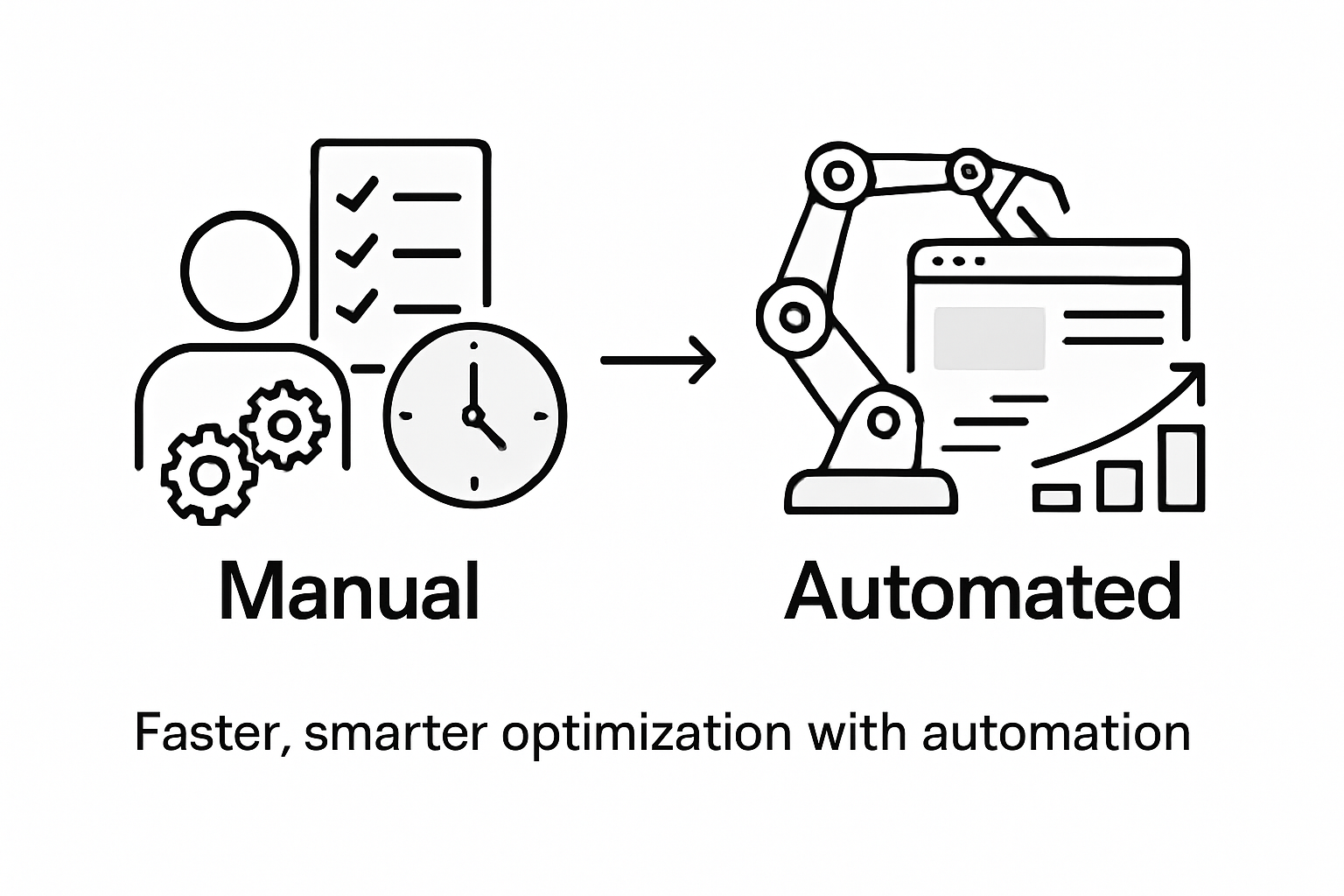
In contrast, automated A/B testing platforms leverage advanced algorithms and artificial intelligence to streamline the entire optimization process. These intelligent systems can automatically generate test variations, distribute traffic, collect performance data, and provide statistically significant recommendations with minimal human input. The key differences between manual and automated approaches can be understood through several critical dimensions:
Manual A/B Testing Characteristics:
- Requires significant technical knowledge
- Time-consuming setup and implementation
- Limited test variations
- Higher potential for human error
- Slower result interpretation
Automated A/B Testing Characteristics:
- No coding skills required
- Rapid test deployment
- Multiple simultaneous test variations
- Data-driven insights with statistical confidence
- Continuous optimization capabilities
While manual testing offers granular control, automated platforms like Automagic democratize conversion optimization by providing pre-configured test libraries and AI-driven recommendations. These sophisticated tools analyze your specific store design, suggest high-impact tests, and transform complex website optimization into a straightforward, data-driven process that even non-technical store owners can effectively leverage.
How AI-Powered Platforms Work for Shopify
AI-powered A/B testing platforms revolutionize conversion optimization for Shopify stores by leveraging sophisticated machine learning algorithms that transform complex data analysis into actionable insights. These intelligent systems go beyond traditional testing methods by automatically generating, deploying, and analyzing website variations with unprecedented speed and precision.

The core mechanism of conversion tracking technologies involves multiple strategic components. First, the AI platform scans your existing Shopify store design, identifying potential optimization opportunities across critical elements like product pages, checkout processes, and website layout. Advanced algorithms then generate multiple test variations, each strategically designed to improve specific performance metrics such as click-through rates, cart additions, and final purchase completions.
Key AI-driven optimization processes include:
- Intelligent Variation Generation: Automatically creating multiple design alternatives
- Traffic Distribution: Dynamically allocating visitor traffic across test versions
- Real-time Statistical Analysis: Continuously monitoring and interpreting test performance
- Predictive Recommendation Engine: Suggesting highest-probability improvements
- Automated Implementation: Seamlessly applying winning variations
By eliminating manual intervention and leveraging machine learning, these platforms transform website optimization from a complex, time-consuming process into a streamlined, data-driven strategy. Shopify store owners can now access sophisticated testing capabilities without requiring deep technical expertise, enabling even small businesses to compete effectively in the increasingly competitive ecommerce landscape.
Key Features of Conversion Optimization Tools
Conversion optimization tools for Shopify stores represent a sophisticated ecosystem of features designed to systematically improve online sales performance. These platforms integrate advanced technologies that transform raw website data into actionable strategies, enabling store owners to make precise, data-driven decisions about their digital storefronts.
The most powerful conversion optimization platforms offer a comprehensive suite of features that go beyond simple A/B testing. Shopify analytics solutions provide deep insights into user behavior, tracking critical metrics like visitor engagement, bounce rates, and purchase funnel performance. These tools combine multiple sophisticated capabilities to create a holistic optimization approach:
Core Optimization Features:
- Automated Variation Generation: Creating multiple design alternatives automatically
- Real-time Traffic Segmentation: Intelligently distributing visitor traffic
- Advanced Statistical Modeling: Providing statistically significant test results
- Machine Learning Recommendations: Suggesting highest-probability improvements
- Seamless Integration: Connecting directly with Shopify store backends
Professional conversion optimization platforms distinguish themselves through intelligent, adaptive technologies that minimize manual intervention while maximizing potential revenue gains. By leveraging AI-driven insights and automated testing capabilities, these tools empower Shopify store owners to continuously refine their online presence, transforming website optimization from a complex technical challenge into a streamlined, data-powered strategy.
Costs, ROI, and Common Pitfalls to Avoid
A/B testing platforms for Shopify stores present a strategic investment with nuanced financial considerations that extend far beyond simple pricing models. Understanding the true economic impact requires a comprehensive analysis of potential returns, implementation costs, and the often-overlooked expenses associated with conversion optimization technologies.
Top A/B testing platforms typically offer tiered pricing structures ranging from free basic plans to enterprise-level solutions costing several hundred dollars monthly. The critical metric for evaluation is not the platform’s cost, but its potential return on investment through increased conversion rates and revenue generation.
Key Financial Considerations:
- Initial Platform Cost: Monthly subscriptions ranging from $29 to $299
- Potential Revenue Increase: 10-30% conversion rate improvement
- Average Return Timeframe: 2-4 months for investment recovery
- Hidden Costs: Additional design or development expenses
Common Pitfalls to Strategically Avoid:
- Running tests without statistical significance
- Testing too many variables simultaneously
- Ignoring sample size requirements
- Prematurely ending tests
- Overlooking mobile user experience
Successful Shopify store owners recognize that conversion optimization is an ongoing process, not a one-time solution. By carefully selecting platforms, understanding true costs, and implementing methodical testing strategies, businesses can transform these tools from expenses into powerful revenue generation mechanisms.
Unlock Higher Shopify Conversions with Automated A/B Testing
The challenge of boosting Shopify conversions without deep technical skills is real and ongoing. This article highlights how manual A/B testing consumes time, risks error, and lacks scale. If you want to avoid pitfalls like inconclusive tests or slow deployments, Automagic.li offers the perfect AI-powered solution. Our platform delivers a ready-made library of high-impact, pre-tested variations that adapt automatically to your store design, freeing you from coding hassles while ensuring statistically significant results.
Experience easy test deployment, data-driven insights, and continuous optimization with intelligent automation designed specifically for Shopify store owners. Improve conversion rates quickly and confidently by choosing from over 40 proven tests prioritized by impact and certainty. Leverage AI to remove guesswork and manual effort, so you can focus on growing your business.
Ready to transform your optimization strategy and compete confidently in ecommerce? Discover how automation can simplify and accelerate your conversions today.
Drive results faster with Automagic’s AI-Powered A/B Testing Platform made just for Shopify.
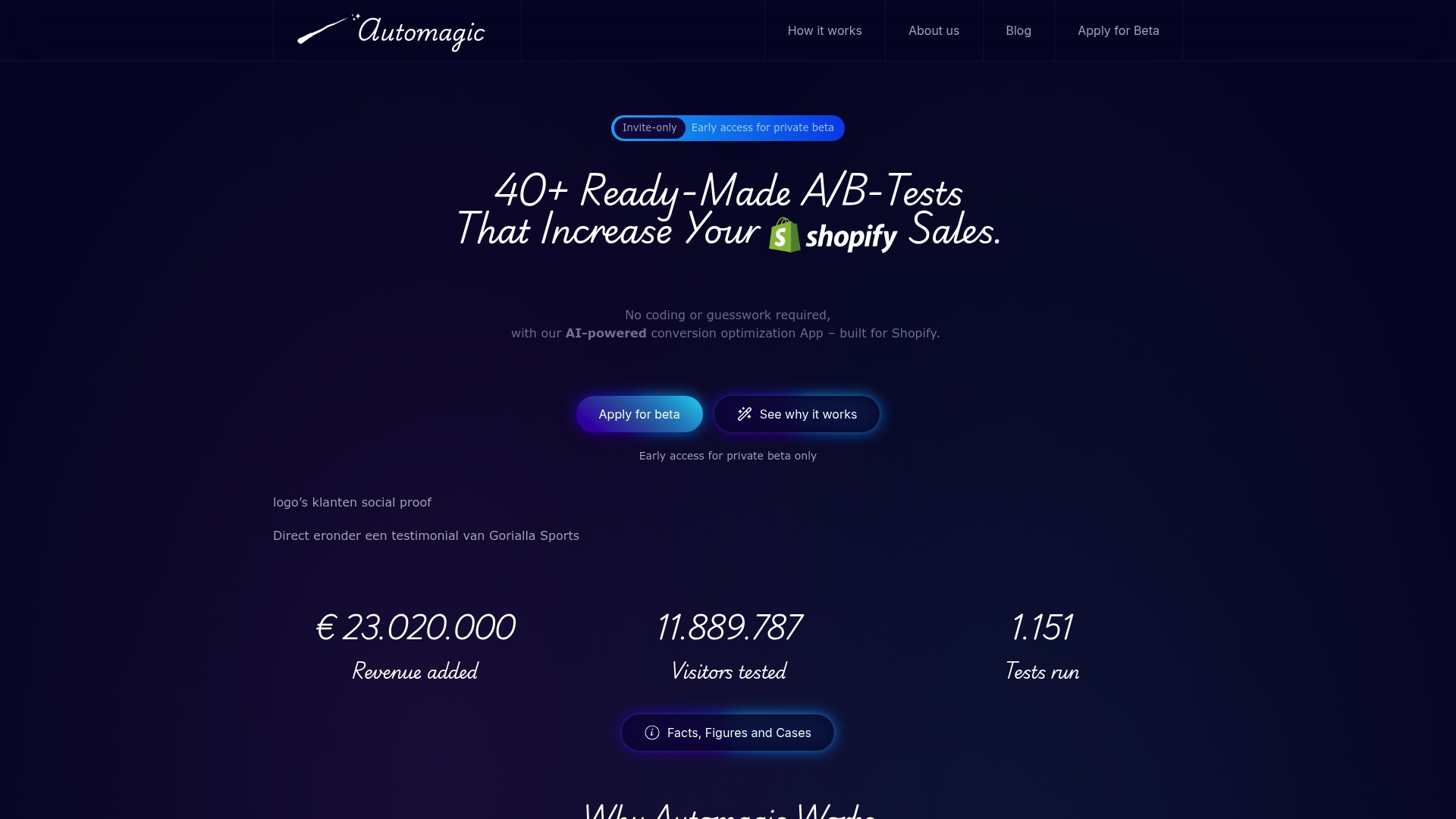
Try Automagic now and start turning visitors into loyal customers with scientifically backed tests that require no coding skills. Visit https://automagic.li to get started. Learn more about how our platform works at How It Works and understand why conversion tracking matters at Importance of Conversion Tracking.
Frequently Asked Questions
What is an A/B testing platform?
An A/B testing platform is a digital tool that allows Shopify store owners to compare two versions of a webpage or design to determine which one results in better conversion rates, helping them make data-driven decisions.
How do automated A/B testing platforms differ from manual testing?
Automated A/B testing platforms use algorithms and AI to generate test variations, distribute traffic, and analyze performance with minimal human input, whereas manual testing requires significant technical knowledge and involves hands-on setup and analysis.
What key features should I look for in a conversion optimization tool?
Look for features such as automated variation generation, real-time traffic segmentation, advanced statistical modeling, machine learning recommendations, and seamless integration with Shopify.
How can I calculate the return on investment (ROI) for using an A/B testing platform?
To calculate ROI, consider the initial platform cost, potential revenue increases due to improved conversion rates (typically ranging from 10-30%), the timeframe for investment recovery (often 2-4 months), and any additional hidden costs associated with design or development.