
Importance of Conversion Tracking for Shopify Stores
Nearly every American Shopify store owner wants more sales, yet many do not track which actions actually drive conversions. Mastering conversion tracking is vital because guessing about customer behavior leaves too much to chance. With more than 60 percent of online retailers saying they struggle to pinpoint their most profitable tactics, gaining clear insight puts you ahead. This guide breaks down practical steps that help American businesses confidently turn web traffic into loyal customers.
Table of Contents
- Defining Conversion Tracking In eCommerce
- Common Types And Tools For Shopify Stores
- How Conversion Tracking Drives Decision Making
- Integrating AI-Powered Solutions Like Automagicli
- Avoiding Common Conversion Tracking Errors
Key Takeaways
| Point | Details |
|---|---|
| Role of Conversion Tracking | Conversion tracking is essential for transforming anonymous visitors into paying customers by analyzing their actions on eCommerce sites. |
| Importance of Tools | Utilizing tools like Google Analytics and A/B testing applications allows store owners to derive actionable insights from user interactions. |
| Data-Driven Decision Making | Effective conversion tracking enables entrepreneurs to make informed decisions regarding marketing strategies and customer acquisition. |
| Common Tracking Errors | Awareness of misconfiguration pitfalls is crucial to ensure accurate data collection for reliable business intelligence. |
Defining Conversion Tracking in eCommerce
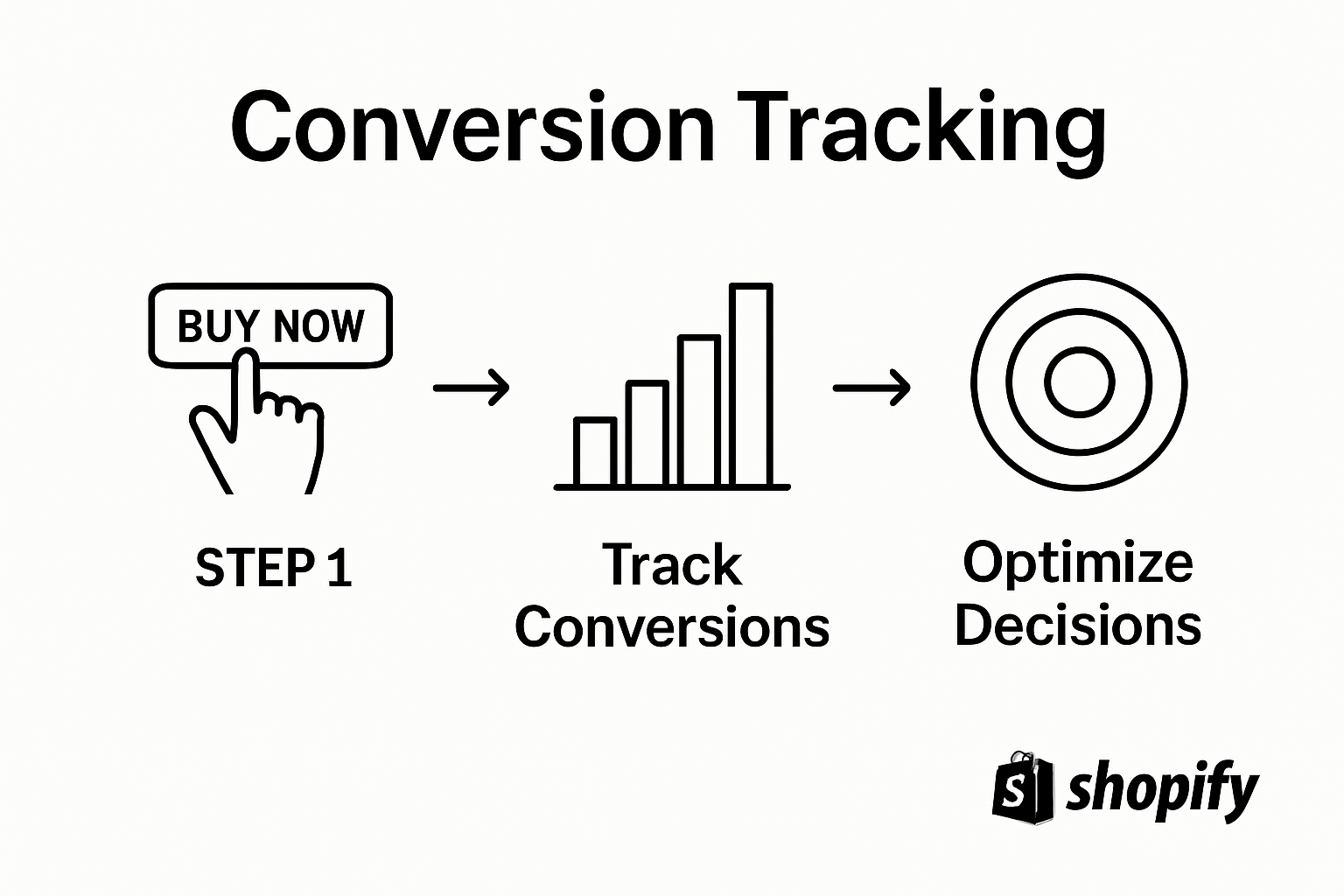
Conversion tracking is the systematic process of monitoring and analyzing user actions that transform casual website visitors into paying customers. At its core, conversion tracking identifies precise moments when potential buyers take desired actions within an online store, such as completing a purchase, signing up for a newsletter, or adding items to their cart. By meticulously tracking these interactions, Shopify store owners can gain critical insights into their marketing performance and customer behavior.
The international research on digital commerce defines conversion tracking as a comprehensive method of measuring user engagement through specific, traceable goals. These goals extend beyond simple sales metrics and encompass a range of valuable customer interactions. Typical conversion events for Shopify stores might include product page views, email list subscriptions, cart additions, completed checkouts, and even social media shares.
Effective conversion tracking transforms raw data into actionable intelligence. By understanding which marketing channels, product pages, and user pathways generate the most conversions, store owners can make strategic decisions about website design, product positioning, and advertising spend. Modern Shopify analytics tools enable precise tracking of these critical metrics, allowing businesses to:
- Identify high-performing traffic sources
- Understand customer journey bottlenecks
- Calculate accurate conversion rates
- Optimize marketing campaign effectiveness
- Make data-driven improvements to store performance
Store owners who neglect comprehensive conversion tracking essentially operate their businesses blindfolded. Without clear visibility into user behavior and conversion patterns, critical opportunities for growth and optimization remain hidden. By embracing robust tracking strategies, Shopify entrepreneurs can continuously refine their online stores, enhance customer experiences, and ultimately drive sustainable revenue growth.
Common Types and Tools for Shopify Stores
Shopify store owners have access to a diverse ecosystem of conversion tracking tools designed to provide comprehensive insights into customer behavior and website performance. Understanding the various types of tracking mechanisms helps entrepreneurs make data-driven decisions that can significantly improve their online business strategies.
Research on e-commerce analytics reveals multiple essential tracking tools that Shopify merchants can leverage. These include:
-
Web Analytics Tools
- Google Analytics 4
- Shopify’s built-in analytics dashboard
- Mixpanel
-
User Behavior Tracking
- HotJar
- Crazy Egg
- MouseFlow
-
Conversion Optimization Platforms
- A/B testing applications for systematic performance improvements
- Conversion rate optimization (CRO) software
- Advanced segmentation tools
The systematic research on A/B testing methodologies demonstrates that strategic tracking goes beyond simple data collection. By implementing comprehensive tracking strategies, Shopify entrepreneurs can uncover nuanced insights about customer journeys, identify friction points in their sales funnels, and make precise, targeted improvements to their online stores.
Successful conversion tracking requires a multifaceted approach that combines quantitative metrics with qualitative user experience data. Store owners should focus not just on collecting information, but on interpreting complex behavioral patterns that reveal underlying customer motivations and potential optimization opportunities. By integrating advanced tracking tools and maintaining a data-driven mindset, Shopify stores can transform raw analytics into actionable strategies that drive meaningful business growth.

How Conversion Tracking Drives Decision Making
Conversion tracking transforms raw data into strategic business intelligence, empowering Shopify store owners to make precise, informed decisions that directly impact revenue and growth. By systematically capturing and analyzing user interactions, businesses can move beyond intuition and groundless assumptions to develop targeted, evidence-based strategies.
Research from the International Journal of Management and Humanities reveals that conversion tracking enables businesses to measure the effectiveness of advertising campaigns through granular analysis of user behavior and conversion rates. This data-driven approach allows entrepreneurs to:
- Identify most profitable marketing channels
- Understand customer acquisition costs
- Optimize advertising spend
- Pinpoint high-performing product lines
- Detect potential customer experience bottlenecks
The strategic power of A/B testing methodologies further amplifies decision-making capabilities. By systematically comparing different website versions, Shopify store owners can make incremental improvements that compound over time. This approach transforms decision-making from a guessing game into a scientific process of continuous optimization.
Ultimately, conversion tracking is about translating complex user data into actionable insights. Successful store owners view these metrics not as static numbers, but as dynamic narratives that reveal customer preferences, behavioral patterns, and emerging market trends. By embracing a data-driven mindset, Shopify entrepreneurs can create more responsive, customer-centric online experiences that drive sustainable business growth.
Integrating AI-Powered Solutions Like Automagic.li
Artificial intelligence is revolutionizing conversion tracking for Shopify stores, offering unprecedented capabilities to analyze, optimize, and predict user behavior with remarkable precision. Modern AI-powered solutions transform raw data into intelligent insights, enabling store owners to make strategic decisions that dramatically improve performance and user experience.
Research from Carnegie Mellon’s WebAssembly Research Center highlights the transformative potential of advanced technologies in e-commerce platforms. AI-driven tools can now provide granular insights by:
- Analyzing complex user interaction patterns
- Predicting potential customer behaviors
- Identifying conversion bottlenecks
- Recommending personalized optimization strategies
- Automating complex testing and optimization processes
The application of AI technologies enables Shopify entrepreneurs to move beyond traditional analytics, creating dynamically adaptive online experiences. By leveraging machine learning algorithms, stores can now implement:
- Real-time personalization
- Predictive customer segmentation
- Intelligent product recommendations
- Automated conversion path optimization
- Advanced user experience enhancements
Ultimately, AI-powered conversion tracking represents a paradigm shift from reactive to proactive business intelligence. These technologies don’t just report past performance—they provide actionable insights that anticipate customer needs, optimize marketing strategies, and create more engaging, responsive online shopping experiences. For Shopify store owners, embracing AI means transforming data into a strategic asset that drives continuous improvement and sustainable growth.
Avoiding Common Conversion Tracking Errors
Conversion tracking requires precision and strategic implementation to deliver meaningful insights for Shopify stores. Even small misconfiguration can lead to significant data misinterpretation, potentially causing entrepreneurs to make misguided business decisions that compromise growth and profitability.
Research from the International Journal of Management and Humanities reveals several critical errors that Shopify store owners frequently encounter in conversion tracking:
- Improperly configured tracking goals
- Inconsistent data collection methods
- Failing to segment conversion data
- Neglecting cross-platform tracking
- Ignoring statistical significance
The systematic approach to A/B testing research underscores the importance of comprehensive validation processes. Common tracking errors can manifest through:
- Misaligned conversion event definitions
- Incomplete user journey mapping
- Relying on insufficient sample sizes
- Overlooking contextual variations
- Not accounting for seasonal fluctuations
Successful conversion tracking demands a meticulous, data-driven approach that goes beyond surface-level metrics. Store owners must develop a robust framework for continuous monitoring, regularly audit their tracking configurations, and maintain a critical perspective on the data they collect. By understanding potential pitfalls and implementing rigorous validation techniques, Shopify entrepreneurs can transform conversion tracking from a potential source of misleading information into a powerful tool for strategic decision-making.
Unlock Your Shopify Store’s True Potential with AI-Powered Conversion Tracking
The article highlights key challenges Shopify store owners face such as tracking precise user behaviors, identifying conversion bottlenecks, and interpreting complex data to make strategic decisions. If you have felt overwhelmed by the technical complexity of conversion tracking or unsure how to turn data into actionable growth strategies, you are not alone. Automagic.li was built to solve exactly these pain points by providing an intuitive AI-driven platform that delivers ready-made, high-impact A/B tests requiring no coding knowledge. This allows you to optimize your Shopify store quickly without hiring developers or wasting time on guesswork.
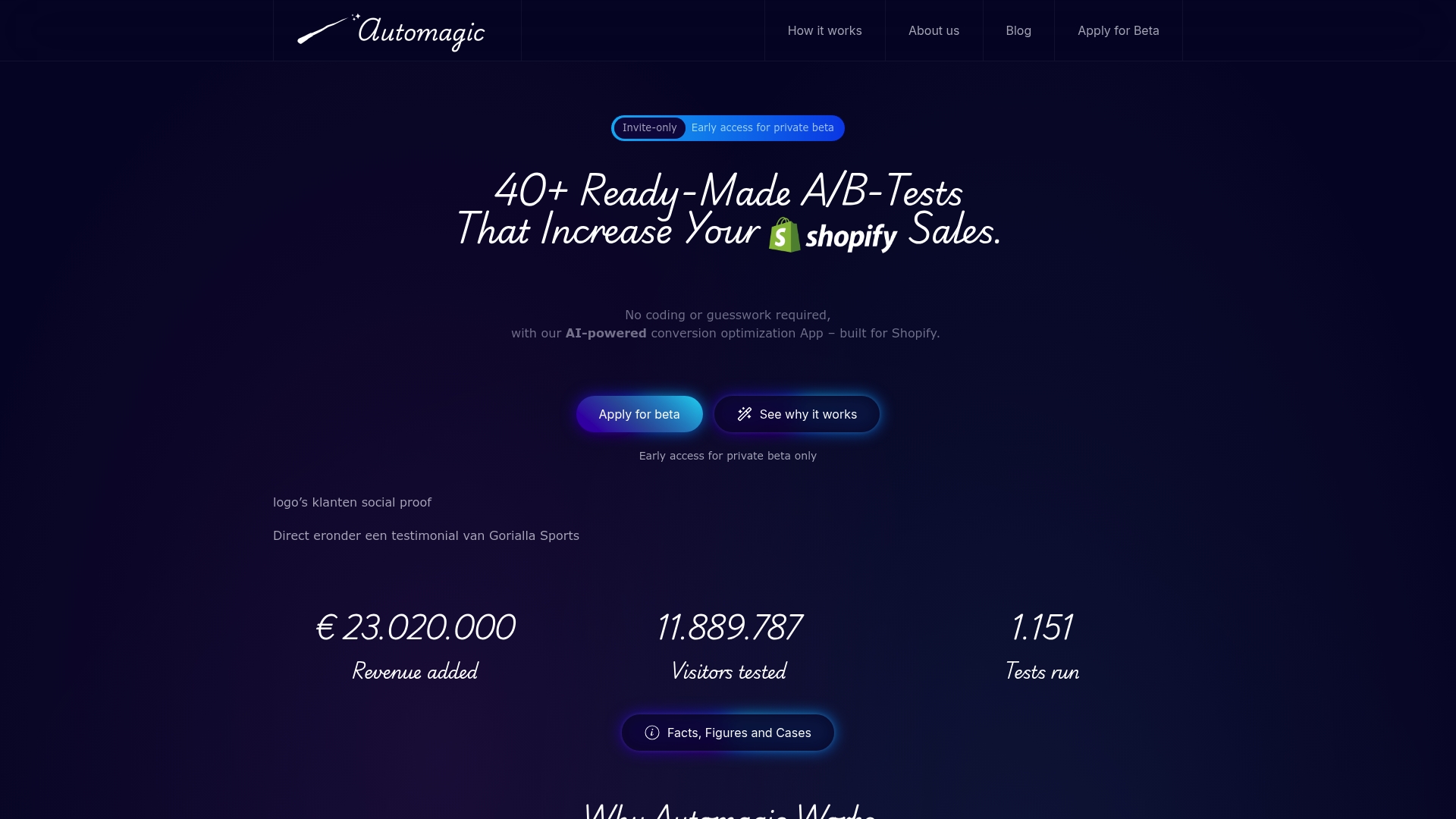
Take control of your conversion tracking and data-driven optimization with a solution designed specifically for Shopify entrepreneurs. With over 40 pre-tested variations sorted by impact and certainty, Automagic.li lets you implement changes that really move the needle on your sales growth. Don’t let misconfigured tracking or missed opportunities hold you back. Visit Automagic.li today and explore how our AI-powered tools turn complex conversion data into simple, reliable decisions that drive real business results. Start optimizing smarter and grow faster now.
Frequently Asked Questions
What is conversion tracking in eCommerce?
Conversion tracking in eCommerce refers to the systematic process of monitoring and analyzing user actions that lead to desirable outcomes, such as purchases or sign-ups, thereby helping store owners understand customer behavior and marketing effectiveness.
Why is conversion tracking important for Shopify store owners?
Conversion tracking is crucial as it allows Shopify store owners to identify high-performing traffic sources, optimize marketing strategies, and enhance customer experiences based on data-driven insights, ultimately driving revenue growth.
What tools can Shopify stores use for conversion tracking?
Shopify stores can utilize a variety of conversion tracking tools such as Google Analytics 4, HotJar, Crazy Egg, and A/B testing applications to gather insights about user interactions and optimize their online performance.
How can AI improve conversion tracking for Shopify stores?
AI can enhance conversion tracking by providing in-depth analysis of user behavior, predicting customer actions, and automating optimization processes, enabling Shopify store owners to create more engaging and personalized shopping experiences.
Recommended
- Complete Guide to Conversion Funnels for Shopify – Automagic
- Shopify Analytics Explained: Complete Guide for 2025 – Automagic
- 2026 update: Top A/B Testing App for Shopify Stores: Boosting Conversion in Ecommerce – Automagic
- Shopify A/B Testing Basics: Complete Guide for Stores – Automagic
- Mastering Your Sales Conversion Rate: A Practical Guide | Reddog Consulting Group
- 5 Ways To Increase Your eCommerce Conversion Rate – Paul Baguley