
Shopify A/B Testing Basics: Complete Guide for Stores
Most American Shopify store owners have heard that small tweaks can lead to huge sales lifts, but myths still hold many back from unlocking real growth. Research shows even modest A/B testing can increase conversion rates by 10 to 50 percent for stores of any size. With so much competition online, understanding the truth behind A/B testing is crucial for every American entrepreneur eager to get ahead and make smarter decisions for their Shopify business.
Table of Contents
- Defining Shopify A/B Testing And Common Myths
- Types Of A/B Tests For Shopify Stores
- How AI-Powered A/B Testing Works
- Key Benefits Of Automated Test Libraries
- Common Pitfalls And How To Avoid Them
Key Takeaways
| Point | Details |
|---|---|
| A/B Testing Enhances Optimization | Systematically comparing webpage versions allows Shopify owners to make data-driven decisions improving conversion rates. |
| Myths Can Hinder Implementation | Many believe A/B testing is too complex or only suited for big brands, but even small stores can benefit significantly. |
| Automation Streamlines Processes | Automated test libraries reduce complexity, enabling rapid experimentation and better insights without extensive coding. |
| Avoid Common Pitfalls | Successful A/B testing requires sufficient traffic, avoiding premature terminations, and isolating test variables to ensure reliability. |
Defining Shopify A/B Testing and Common Myths
A/B testing for Shopify stores represents a strategic approach to optimizing website performance by systematically comparing two versions of a webpage to determine which one drives better conversion rates. Unlike traditional guesswork, A/B testing provides data-driven insights that help store owners make informed decisions about design, layout, and user experience.
At its core, A/B testing involves creating two slightly different versions of a webpage or specific element – Version A (the control) and Version B (the variant) – then exposing these versions to similar audience segments to measure their relative performance. Martech research indicates that despite claims of its obsolescence, A/B testing remains a critical tool for digital marketers seeking measurable improvements in conversion rates.
Common myths often discourage Shopify store owners from implementing A/B testing, but understanding these misconceptions can unlock significant growth potential. Here are several prevalent myths debunked:
-
Myth 1: A/B Testing is Too Complex
Contrary to popular belief, modern tools like ready-made A/B test libraries have dramatically simplified the testing process, making it accessible even for non-technical store owners. -
Myth 2: You Need Large Traffic Volumes
While more traffic provides faster results, meaningful insights can be gained even with moderate website traffic by using statistically sound testing methodologies. -
Myth 3: A/B Testing Only Matters for Big Brands
Small and medium Shopify stores can see substantial improvements through strategic testing, with potential conversion rate increases of 10-50% by making data-driven design choices.
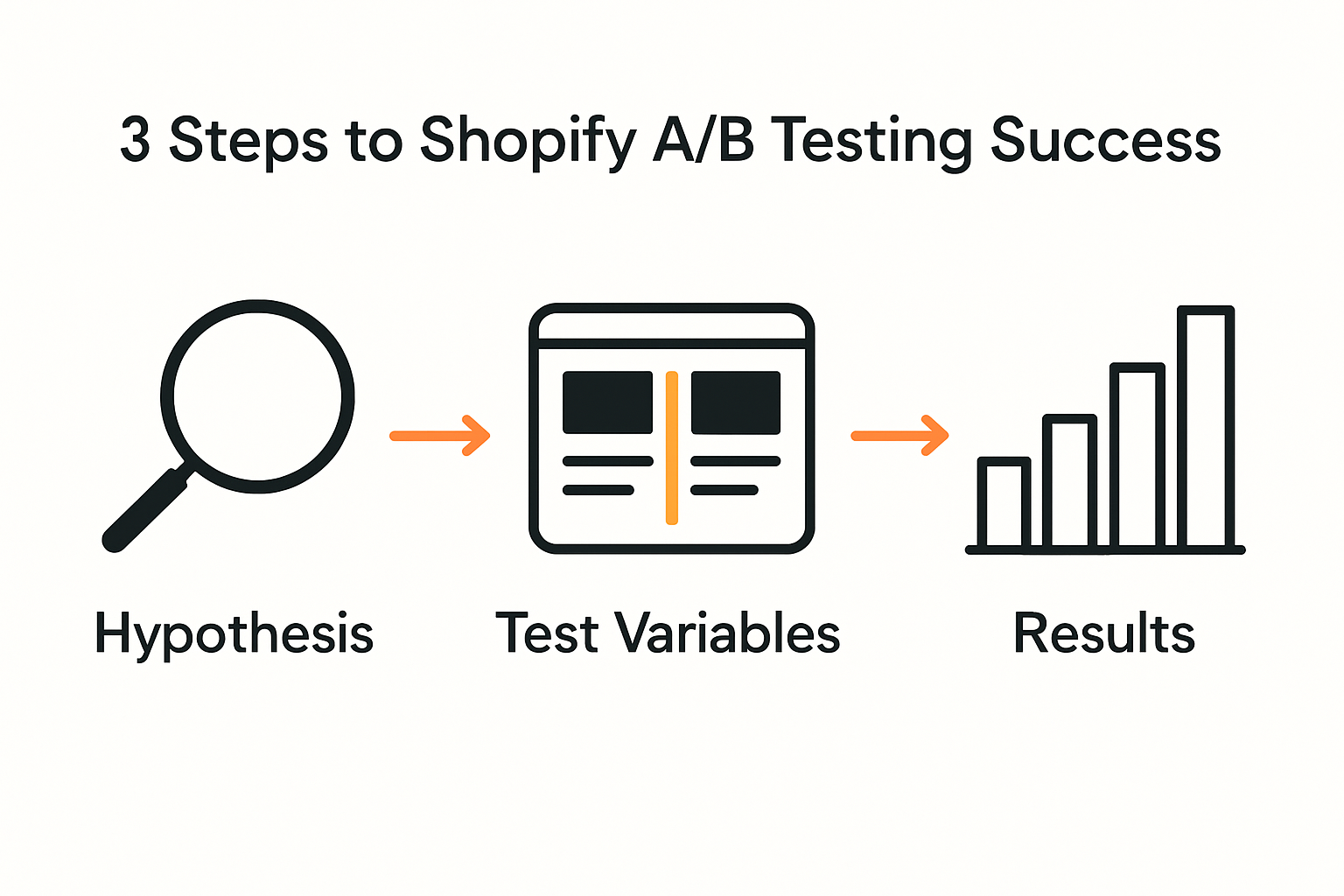
Successful A/B testing requires a methodical approach: clearly define your hypothesis, isolate specific variables, ensure statistical significance, and iterate based on results. By adopting this systematic mindset, Shopify store owners can transform their websites from static storefronts into dynamic, continuously improving sales platforms.
Types of A/B Tests for Shopify Stores
Shopify store owners can leverage multiple types of A/B tests to optimize their online performance, each targeting different aspects of the digital shopping experience. Advanced testing methodologies demonstrate that strategic experimentation can dramatically improve conversion rates across various store elements.
The most impactful A/B tests for Shopify stores typically fall into several key categories:
-
Product Page Tests
Experiments focused on product descriptions, image layouts, pricing displays, and call-to-action button designs. These tests can significantly influence purchasing decisions by improving visual communication and reducing potential customer friction. -
Checkout Process Tests
Evaluating different checkout flow variations, form designs, payment method placements, and trust signal presentations. Minor optimizations here can dramatically reduce cart abandonment rates. -
Homepage and Navigation Tests
Exploring different header layouts, menu structures, featured product arrangements, and overall visual hierarchy to enhance user experience and guide visitors toward conversion. -
Pricing and Promotional Strategy Tests
Comparing different discount presentation methods, price positioning, and promotional banner designs to maximize perceived value and stimulate purchase motivation. -
Mobile Responsive Design Tests
Ensuring optimal user experience across various device sizes by testing different mobile layout configurations, button sizes, and touch-friendly interfaces.
Top A/B testing applications for Shopify now incorporate artificial intelligence to accelerate and refine these testing processes. By systematically evaluating these key store elements, Shopify entrepreneurs can incrementally improve their online performance, transforming data-driven insights into tangible revenue growth.

How AI-Powered A/B Testing Works
Artificial Intelligence has revolutionized A/B testing by introducing sophisticated algorithms that transform traditional experimental approaches into intelligent, adaptive optimization strategies. Advanced machine learning techniques now enable Shopify store owners to conduct more nuanced and precise experiments that go beyond simple statistical comparisons.
The core mechanism of AI-powered A/B testing involves several sophisticated processes:
-
Intelligent Hypothesis Generation
AI algorithms can automatically identify potential optimization areas by analyzing user interaction data, suggesting test variations that human analysts might overlook. -
Dynamic Sample Allocation
Machine learning models dynamically adjust traffic allocation between test variants, rapidly identifying and prioritizing higher-performing versions while minimizing potential revenue loss. -
Predictive Performance Modeling
Advanced AI systems can predict potential test outcomes with remarkable accuracy, allowing store owners to simulate and estimate conversion impacts before full-scale implementation. -
Multivariate Analysis
Unlike traditional A/B testing, AI-powered approaches can simultaneously evaluate multiple variables, providing comprehensive insights into complex user behavior patterns.
Validation techniques play a critical role in ensuring the statistical integrity of AI-driven tests, incorporating machine learning algorithms that can detect subtle performance differences and minimize false positive results. By leveraging these intelligent systems, Shopify entrepreneurs can transform their stores from static platforms into dynamically optimized sales engines, continuously improving user experience and conversion potential through data-driven insights.
Key Benefits of Automated Test Libraries
Automated test libraries represent a transformative approach for Shopify store owners seeking efficient and data-driven optimization strategies. Testing automation technologies enable businesses to overcome traditional limitations in conversion rate optimization, providing scalable solutions that minimize manual effort and maximize strategic insights.
The key advantages of leveraging automated test libraries extend across multiple critical business dimensions:
-
Rapid Experimentation
Automated libraries dramatically reduce the time and technical complexity required to design, implement, and analyze A/B tests, allowing store owners to iterate quickly without extensive coding knowledge. -
Statistical Precision
AI-driven testing tools incorporate advanced algorithms that ensure higher accuracy in detecting meaningful performance differences, minimizing false positives and providing more reliable optimization recommendations. -
Resource Efficiency
By automating repetitive testing processes, these libraries free up valuable time and technical resources, enabling smaller teams to conduct sophisticated conversion optimization experiments typically reserved for larger organizations. -
Comprehensive Insights
Automated test libraries can simultaneously analyze multiple variables, uncovering complex user interaction patterns that manual testing might overlook, thus providing a more holistic understanding of store performance. -
Continuous Optimization
These intelligent systems create a perpetual improvement cycle, constantly identifying and suggesting potential enhancements based on real-time user behavior and performance metrics.
By embracing automated test libraries, Shopify entrepreneurs transform their stores from static platforms into dynamic, self-optimizing sales environments that continuously adapt to changing customer preferences and market dynamics.
Common Pitfalls and How to Avoid Them
A/B testing requires strategic navigation to prevent costly mistakes that can undermine conversion optimization efforts. Advanced testing methodologies reveal critical pitfalls that Shopify store owners must carefully manage to ensure meaningful and reliable test results.
The most significant challenges in A/B testing emerge across several key areas:
-
Insufficient Sample Size
Running tests with inadequate traffic can lead to statistically insignificant results. Store owners must ensure sufficient visitor volume to generate meaningful insights, typically requiring at least 1,000 total visitors per test variant. -
Premature Test Termination
Stopping tests too early or based on initial promising results can produce misleading conclusions. Establishing predetermined test duration and statistical significance thresholds prevents reactive decision-making. -
Lack of Segmentation
Failing to consider different user segments can mask nuanced performance variations. Sophisticated testing approaches require analyzing results across multiple dimensions like device type, traffic source, and user demographics. -
Conflicting Test Variables
Simultaneously testing multiple unrelated elements can create complex, uninterpretable results. Successful A/B testing demands isolating specific variables to understand precise performance impacts. -
Confirmation Bias
Unconsciously designing tests to validate preexisting assumptions rather than objectively exploring potential improvements can severely compromise testing integrity.
By implementing rigorous testing protocols and maintaining statistical discipline, Shopify entrepreneurs can transform these potential pitfalls into opportunities for genuine, data-driven store optimization.
Unlock Your Shopify Store’s True Potential with AI-Powered A/B Testing
Struggling to overcome common A/B testing challenges like complex setup, limited traffic, or confusing test variables? The comprehensive guide “Shopify A/B Testing Basics: Complete Guide for Stores” highlights how systematic, data-driven experiments can transform your store’s conversion rates. Imagine accessing over 40 ready-made, high-impact A/B test variations that are tailored to your Shopify store without needing any coding skills. This is exactly what Automagic.li offers — a seamless way to take the guesswork out of optimization with AI-driven customization and automated deployment.
Experience fast, reliable testing that adapts to your store’s unique layout and user behavior. Don’t let technical barriers or limited traffic hold your store back any longer. Visit Automagic.li now to start using our AI-powered test library that makes continuous improvement effortless. Harness the power of intelligent A/B testing to boost your sales and create a shopping experience your customers will love today.
Frequently Asked Questions
What is A/B testing in Shopify?
A/B testing in Shopify refers to the process of comparing two versions of a webpage or element to determine which performs better in terms of conversion rates, allowing store owners to make data-driven design decisions.
How do I conduct an A/B test on my Shopify store?
To conduct an A/B test, create two versions of a webpage element (Version A and Version B), then use an A/B testing tool to randomly expose these versions to similar audience segments and analyze which version yields better results.
What are the most common types of A/B tests for Shopify stores?
The most common types of A/B tests for Shopify stores include product page tests, checkout process tests, homepage navigation tests, pricing and promotional strategy tests, and mobile responsive design tests.
Can I perform A/B testing with low website traffic?
Yes, meaningful insights can be gained with moderate traffic by using statistically sound testing methodologies, although higher traffic typically accelerates the testing process.
Recommended
- 2026 update: Top A/B Testing App for Shopify Stores: Boosting Conversion in Ecommerce – Automagic
- Blog – Automagic
- Automagic – Increase Your Conversion Rate, Automagically
- Automagic Layer – Automagic
- Top Floral Fragrance Dupes – Expert Comparison 2025