
Role of Feedback in Conversion: Boosting Shopify Sales
Most American online shoppers leave some form of feedback, yet only a small percentage of Shopify stores use this data to improve conversions effectively. That gap matters because understanding real customer insights can mean the difference between stagnant sales and steady growth. By learning how to gather and apply specific feedback, store owners gain a clear path to optimizing user experience and boosting results in a crowded eCommerce market.
Table of Contents
- Defining Feedback In Conversion Optimization
- Types Of Feedback In ECommerce
- How Feedback Drives AI-Powered A/B Testing
- Implementing Feedback For Shopify Store Growth
- Common Pitfalls In Leveraging Feedback
Key Takeaways
| Point | Details |
|---|---|
| Importance of Feedback | Systematic feedback collection and analysis are essential for improving website performance and enhancing sales outcomes. |
| Combining Feedback Types | Integrating both quantitative and qualitative feedback methods provides a holistic understanding of customer experiences and preferences. |
| AI-Powered Testing | Leveraging AI in A/B testing can significantly enhance understanding of user behaviors and optimize store performance dynamically. |
| Common Pitfalls | Misinterpretation of feedback and reliance on outdated information can lead to poor decision-making and missed opportunities. |
Defining Feedback in Conversion Optimization
Feedback in conversion optimization represents the systematic process of gathering, analyzing, and implementing user insights to improve website performance and sales outcomes. At its core, this approach transforms raw user interactions into strategic improvements for Shopify stores. Relevance feedback mechanisms enable store owners to refine their digital experiences by understanding how customers interact with their online platforms.
Understanding feedback requires examining multiple dimensions of user experience. The Webreep model highlights critical factors influencing website satisfaction, including navigation quality, content relevance, site performance, and trust signals. These elements directly impact conversion rates by shaping how potential customers perceive and interact with an online store. By tracking user behaviors, collecting survey responses, and analyzing interaction data, Shopify store owners can identify friction points that prevent smooth purchasing journeys.
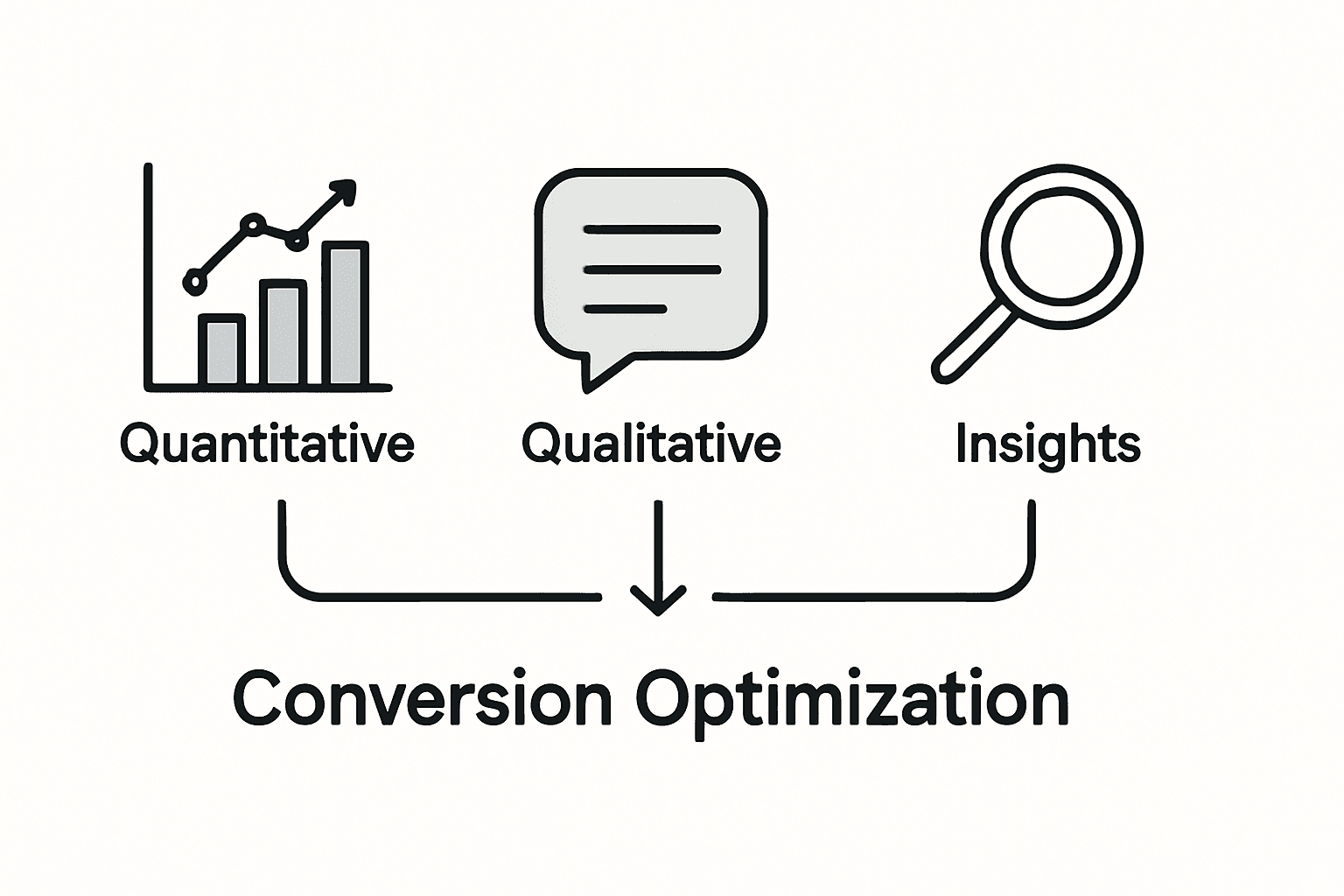
Effective feedback collection involves multiple strategies. Quantitative methods like heatmaps, click tracking, and conversion funnel analysis provide numerical insights into user behavior. Qualitative approaches such as customer surveys, live chat transcripts, and direct user interviews unveil deeper emotional and experiential perspectives. Website satisfaction research suggests that integrating both quantitative and qualitative feedback creates a comprehensive understanding of customer needs and preferences.
Here’s a comparison of quantitative and qualitative feedback methods for Shopify optimization:
| Feedback Method Type | Key Data Collected | Insights Provided | Strength in Conversion Optimization |
|---|---|---|---|
| Quantitative | Click rates, heatmaps | User navigation patterns | Identifies bottlenecks in sales funnel |
| Qualitative | User opinions, interviews | Customer motivations, pain points | Reveals reasons behind behavior changes |
Pro Tip – Feedback Strategy: Implement a continuous feedback loop by setting up automated surveys triggered after specific customer interactions, such as completing a purchase or abandoning a cart. This approach provides real-time insights without overwhelming your customers.
Types of Feedback in eCommerce
Ecommerce feedback encompasses diverse mechanisms for understanding customer experiences and preferences. Customer feedback categories are broadly classified into structured and unstructured formats, each providing unique insights into user interactions and purchasing behaviors. Structured feedback includes systematic data collection methods like numerical ratings, multiple-choice surveys, and standardized questionnaires that quantify customer sentiments with precise metrics.
Unstructured feedback represents a more nuanced approach to understanding customer perspectives. These methods capture raw, emotional responses through open-ended comments, social media interactions, live chat transcripts, and direct customer reviews. Online innovation research distinguishes between explicit feedback, where customers directly communicate their experiences, and implicit feedback, which interprets user behaviors through interaction patterns, time spent on pages, and navigation sequences.
Advanced eCommerce platforms now integrate multiple feedback collection strategies to create comprehensive customer understanding. Quantitative methods like conversion tracking and click-through rates complement qualitative insights from user interviews and sentiment analysis. Implicit feedback techniques are particularly powerful, revealing customer preferences through behavioral data that customers might not consciously articulate. By analyzing these multidimensional feedback streams, Shopify store owners can develop more responsive and customer-centric online shopping experiences.
Pro Tip – Feedback Integration: Develop a holistic feedback strategy that balances automated data collection with periodic direct customer engagement, ensuring you capture both numerical trends and emotional insights about your online store’s performance.
How Feedback Drives AI-Powered A/B Testing
AI-powered A/B testing represents a transformative approach to understanding and optimizing digital experiences for Shopify stores. Advanced research on delayed feedback mechanisms reveals how artificial intelligence can dynamically adapt testing strategies by incorporating time-sensitive user interaction data. This sophisticated approach goes beyond traditional testing methods, enabling store owners to capture nuanced conversion insights that evolve in real time.
The core of AI-driven testing lies in its ability to process complex user feedback signals. Influence functions allow machine learning models to continuously refine testing parameters, adjusting for variations in user behavior and conversion patterns. Cutting-edge research demonstrates how these advanced algorithms can account for delayed feedback, a critical challenge in traditional A/B testing methodologies. By analyzing interaction patterns, time spent on pages, and subtle behavioral cues, AI systems can generate more accurate and predictive testing models.
Modern Shopify stores leverage multiple feedback channels to fuel AI-powered testing strategies. Quantitative metrics like click-through rates, conversion rates, and user engagement are combined with qualitative insights from customer reviews, support interactions, and sentiment analysis. The result is a comprehensive testing framework that adapts dynamically to changing user preferences, continuously optimizing store performance without manual intervention. Machine learning algorithms can identify subtle patterns and potential improvements that human analysts might overlook, providing a significant competitive advantage in the fast-evolving eCommerce landscape.
Pro Tip – Intelligent Testing Strategy: Implement a multi-layered feedback collection system that captures both immediate and delayed user interactions, allowing your AI testing tools to develop increasingly sophisticated optimization recommendations.
Implementing Feedback for Shopify Store Growth
Successful Shopify stores understand that customer feedback is the cornerstone of continuous improvement. Strategic customer experience research reveals that systematically collecting and analyzing feedback can dramatically transform store performance. By creating multiple touchpoints for customer input, store owners can gain deep insights into user preferences, pain points, and potential areas of enhancement.
Effective feedback implementation involves a multifaceted approach. Feedback collection channels should include diverse methods such as post-purchase surveys, product reviews, social media interactions, and direct customer support communications. User-generated content strategies provide particularly rich insights, allowing store owners to understand authentic customer perspectives. These approaches help identify specific product improvements, website design modifications, and customer service enhancements that can directly impact conversion rates.

Technological tools now enable sophisticated feedback analysis for Shopify stores. Advanced analytics platforms can transform raw customer comments into actionable insights, identifying patterns and trends that might not be immediately apparent. Machine learning algorithms can categorize feedback, sentiment score customer interactions, and provide predictive recommendations for store optimization. By treating customer feedback as a strategic asset, store owners can create a dynamic, responsive shopping experience that continuously adapts to changing customer expectations.
Pro Tip – Feedback Integration: Implement a centralized feedback management system that aggregates insights from multiple sources, allowing you to develop a comprehensive understanding of your customer experience and rapidly iterate on store improvements.
Common Pitfalls in Leveraging Feedback
Shopify store owners frequently encounter significant challenges when interpreting and implementing customer feedback. Research on user intention analysis demonstrates that misinterpreting user feedback can lead to misguided business strategies. Simply collecting ratings and reviews is not enough; understanding the nuanced context and underlying motivations behind customer comments is crucial for meaningful insights.
Delayed feedback mechanisms represent another critical challenge in conversion optimization. Advanced modeling research reveals how time-lagged user interactions can create substantial biases in decision-making processes. Shopify stores often struggle with accurately weighing feedback that arrives weeks or months after initial interactions, potentially leading to skewed interpretations of customer preferences and behavioral patterns.
Technological limitations can further complicate feedback interpretation. Many store owners rely on surface-level metrics without developing sophisticated analysis frameworks. Common mistakes include overemphasizing negative feedback, failing to distinguish between statistically significant trends and random variations, and neglecting to segment feedback across different customer demographics. Successful stores develop robust feedback evaluation systems that can differentiate between temporary fluctuations and genuine, systemic issues affecting store performance.
Below is a summary of common feedback pitfalls and their business impact:
| Pitfall Type | Example Scenario | Business Impact |
|---|---|---|
| Misinterpreted Feedback | Overreacting to isolated reviews | Poor decision-making |
| Delayed Feedback Processing | Acting on outdated data | Missed opportunities |
| Lack of Segmentation | Ignoring customer demographics | Ineffective changes |
| Overweighting Negativity | Prioritizing negative outliers | Damage to brand |
Pro Tip – Feedback Calibration: Develop a structured feedback scoring system that weights customer comments based on recency, specificity, and demonstrated impact on key performance indicators.
Unlock Your Shopify Store’s Full Potential with AI-Powered Feedback Integration
The article highlights how capturing and acting on customer feedback is essential for continuous growth yet challenging due to delayed insights and complex data interpretation. Many Shopify store owners struggle to translate qualitative and quantitative user feedback into effective conversion improvements without technical expertise or the right tools. This is where Automagic.li stands out by empowering you to harness AI-driven A/B testing that uses real user behavior patterns and feedback data to boost your sales effortlessly. Its extensive library of pre-tested variations and automated customization ensures your store adapts dynamically to customer preferences without requiring you to write a single line of code.
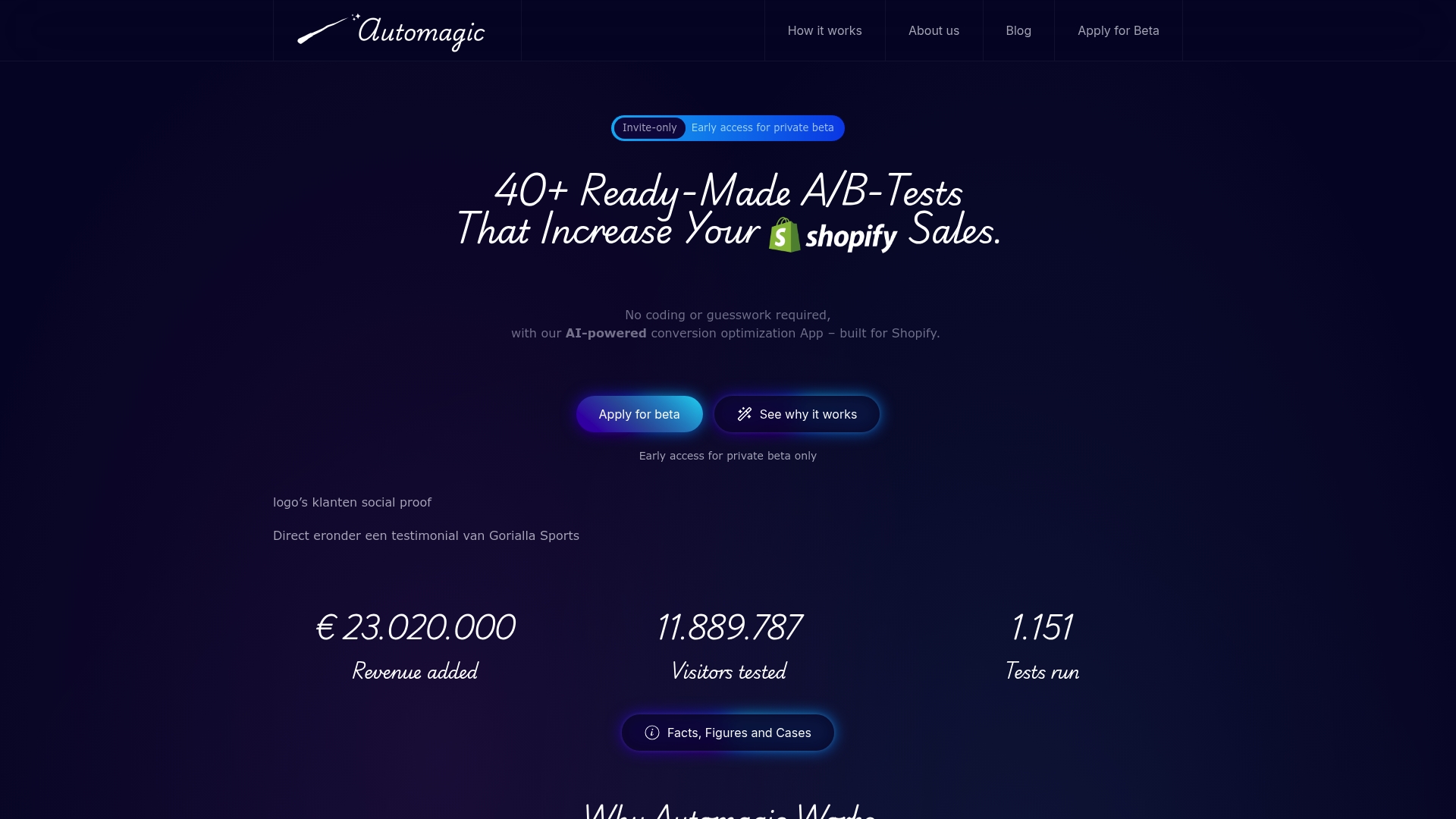
Experience the power of automated, data-driven optimization that bridges the gap between feedback analysis and actionable changes today. Visit Automagic.li to transform your Shopify conversion strategy and start deploying high-impact tests instantly. Don’t let valuable feedback go underutilized when you can convert insights into measurable revenue growth now.
Frequently Asked Questions
What is feedback in conversion optimization?
Feedback in conversion optimization refers to the systematic process of gathering, analyzing, and implementing user insights to enhance website performance and sales outcomes. It helps store owners understand customer interactions to make strategic improvements.
Why is it important to collect both quantitative and qualitative feedback?
Collecting both types of feedback provides a comprehensive understanding of customer needs. Quantitative methods provide numerical data on user behavior, while qualitative methods reveal emotional and experiential insights, allowing for more effective optimization.
How can feedback be effectively integrated into a Shopify store?
Feedback can be effectively integrated by implementing multiple collection channels, such as post-purchase surveys and social media interactions. Additionally, using advanced analytics tools to analyze this feedback can help identify areas for improvement.
What are common pitfalls when leveraging customer feedback?
Common pitfalls include misinterpreting feedback, acting on delayed responses, and overemphasizing negative comments. These mistakes can lead to misguided strategies and missed opportunities for improvement.