
Explaining Shopify Apps: Boosting Your Store’s Success
Over 80 percent of American businesses using Shopify rely on apps to run their online stores more smoothly. With ecommerce competition fiercer than ever, choosing the right digital tools has real consequences for growth, efficiency, and customer satisfaction. Understanding how Shopify Apps work, what features to look for, and which categories provide the most benefit can make a dramatic difference in how an American merchant stands out online.
Table of Contents
- What Are Shopify Apps And How They Work
- Different Types Of Shopify Apps For Stores
- Essential Features And Integrations To Consider
- Costs, Installation, And Ongoing Management
- Maximizing Impact With Ai-Powered Optimization
Key Takeaways
| Point | Details |
|---|---|
| Shopify Apps Enhance Functionality | Shopify Apps extend the basic capabilities of online stores, offering tailored solutions for marketing, sales, and customer management. |
| Diverse Categories Available | Apps are categorized into functions like Marketing & Automation, Inventory & Fulfillment, and Customer Engagement to address specific needs. |
| Strategic App Selection is Key | Choosing the right apps involves assessing their compatibility, scalability, and impact on performance based on unique business requirements. |
| AI-Powered Tools Transform Ecommerce | AI optimization tools provide actionable insights and improve customer experiences by analyzing data and predicting behaviors efficiently. |
What Are Shopify Apps and How They Work
Shopify Apps are specialized software extensions designed to enhance and customize online stores built on the Shopify platform. These digital tools help merchants expand their store’s capabilities far beyond basic built-in features, enabling more sophisticated functionality across marketing, sales, shipping, inventory management, and customer experience. Thousands of apps are available that can transform a standard ecommerce website into a powerful, customized sales machine.
The Shopify App Store offers solutions for virtually every business need. Merchants can find apps that help with critical functions like improving search engine optimization (SEO), automating marketing campaigns, tracking detailed analytics, managing complex inventory systems, and streamlining customer service processes. Some apps focus on specific niches like product recommendations, while others provide comprehensive tools for overall store management. Pricing models vary widely – some apps are free, others charge monthly subscriptions, and some offer tiered pricing based on store size and usage.
Choosing the right Shopify App requires careful consideration of your specific business requirements. Shopify’s platform allows merchants to evaluate apps through free trials and basic plans, enabling store owners to test functionality before making financial commitments. Smart store owners typically start by identifying precise pain points in their current operations, then search the App Store for targeted solutions that can directly address those challenges. Key factors to assess include the app’s rating, number of installations, customer reviews, compatibility with existing store setup, and potential return on investment.
Understanding how Shopify Apps integrate with your store is crucial. These apps connect seamlessly through APIs, allowing them to modify or extend your store’s default capabilities without requiring complex coding knowledge. Whether you need to enhance product pages, optimize checkout processes, implement advanced shipping rules, or create sophisticated marketing automation, there’s likely a Shopify App designed to solve your specific business challenge. The best apps not only solve immediate problems but also scale with your business, providing flexible solutions that grow alongside your online store.
Different Types of Shopify Apps for Stores
Shopify offers a diverse ecosystem of apps categorized to address specific business needs and operational challenges. These apps are strategically organized into key functional categories that help merchants enhance their online stores systematically. The primary app categories include Marketing & Automation, Sales Channels, Store Design, Inventory & Fulfillment, and Customer Engagement, each serving distinct purposes in streamlining ecommerce operations.
In the Marketing & Automation category, apps provide powerful tools for email marketing, search engine optimization (SEO), product upsells, and SMS campaign management. Sales Channels apps facilitate seamless integrations with major platforms like Amazon, eBay, TikTok, Instagram, and Facebook, enabling merchants to expand their selling opportunities across multiple digital environments. Store Design apps offer advanced customization options, including product page editors, theme customizers, and navigation enhancement tools that help create visually appealing and user-friendly online stores.
Inventory & Fulfillment apps represent another critical category, offering specialized solutions for dropshipping, print-on-demand services, and comprehensive warehouse management. These apps help store owners track stock levels, automate shipping processes, and manage complex inventory scenarios without manual intervention. Product comparison apps in this ecosystem can even help customers make more informed purchasing decisions by allowing detailed side-by-side comparisons of product features, reducing purchase uncertainty and potentially increasing conversion rates.

The Customer Engagement category rounds out the app types, featuring tools like live chat systems, product review platforms, customer loyalty programs, and comprehensive help desk solutions. These apps focus on creating more interactive, responsive, and personalized shopping experiences. By selecting the right combination of apps from these categories, Shopify store owners can transform their basic online store into a sophisticated, efficient, and customer-centric ecommerce platform that adapts to evolving business needs and market trends.
Essential Features and Integrations to Consider
Selecting the right Shopify apps requires a strategic approach that goes beyond surface-level features. Store owners must carefully evaluate each app’s compatibility, scalability, and potential impact on overall store performance. The most effective apps seamlessly integrate with existing systems, enhance user experience, and provide clear value propositions that directly address specific business challenges and growth objectives.
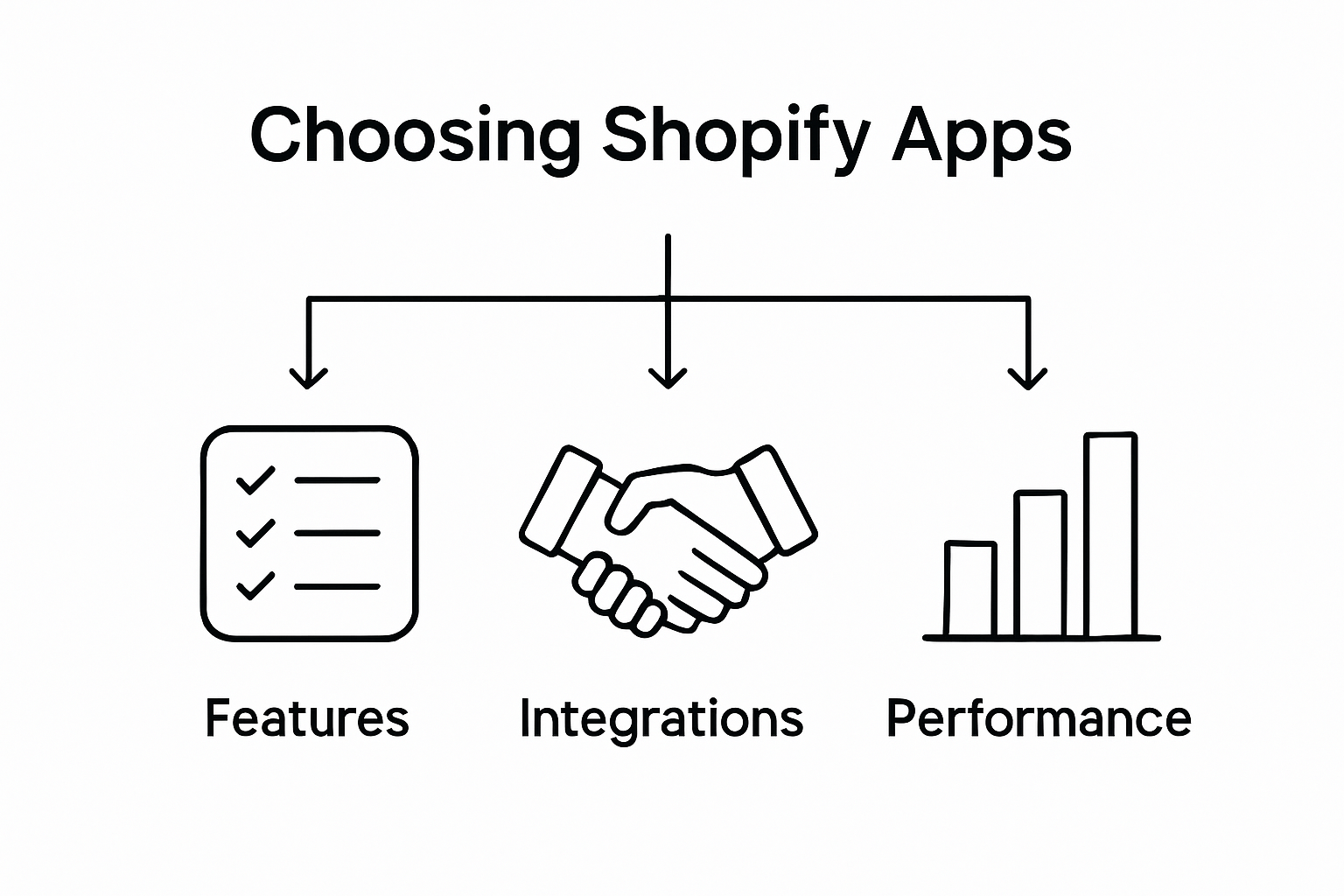
When assessing potential app integrations, merchants should focus on several critical key performance indicators. These include ease of installation, user interface intuitiveness, customer support quality, update frequency, and pricing structure. Technical compatibility is paramount – an app must work harmoniously with your current store theme, existing apps, and overall technological ecosystem. Some essential integration considerations include API flexibility, data synchronization capabilities, and the ability to customize functionality to match unique business workflows.
Beyond technical specifications, the most valuable apps offer robust feature sets that solve complex business problems. Product comparison tools demonstrate this perfectly, allowing customers to make more informed purchasing decisions through detailed feature comparisons. Smart store owners look for apps that not only solve immediate operational challenges but also provide scalable solutions that can adapt as their business grows. This means prioritizing apps with flexible pricing models, comprehensive analytics, and the ability to integrate multiple functions like inventory management, customer engagement, and marketing automation.
The ultimate goal of app integration is creating a streamlined, efficient online store that provides exceptional customer experiences. This requires a holistic approach to app selection – looking beyond individual features to understand how different tools work together. Successful Shopify store owners treat app integration as a strategic investment, carefully evaluating each addition’s potential to reduce manual work, increase conversion rates, and ultimately drive meaningful business growth. By maintaining a critical eye and focusing on apps that offer genuine, measurable value, merchants can transform their online stores into powerful, dynamic ecommerce platforms.
Costs, Installation, and Ongoing Management
Shopify Apps present a diverse range of pricing models that merchants must carefully navigate to manage their store’s technological investments. The pricing landscape typically includes monthly subscriptions, one-time purchase fees, and usage-based charging structures. Smart store owners approach app selection as a strategic financial decision, balancing potential return on investment against upfront and recurring costs. Many apps offer tiered pricing plans, allowing businesses to scale their technological capabilities alongside their growth trajectory.
The installation process for Shopify Apps is designed to be user-friendly, typically requiring just a few clicks within the Shopify App Store. However, successful implementation goes beyond simple activation. Store owners should conduct thorough compatibility checks to ensure new apps integrate seamlessly with existing store themes, payment systems, and other installed applications. This involves reviewing technical specifications, checking user reviews, and potentially consulting with the app developer about potential integration challenges or customization requirements.
Ongoing app management requires consistent attention and proactive monitoring. Store owners must regularly evaluate app performance, tracking key metrics like loading speed, user experience impact, and direct contribution to sales conversions. This involves maintaining an updated app ecosystem, promptly addressing any technical conflicts, and being willing to replace underperforming tools. Some merchants create quarterly review processes to assess their app portfolio, removing redundant applications and identifying new solutions that could enhance store functionality.
The most successful Shopify store owners treat app management as a continuous optimization process. This means staying informed about new app releases, understanding emerging ecommerce technologies, and maintaining a flexible approach to digital tools. Budget considerations should extend beyond initial pricing to include potential productivity gains, reduced manual workload, and increased conversion potential. By maintaining a strategic, analytical approach to app selection and management, merchants can transform their technological investments into powerful drivers of business growth and customer satisfaction.
Maximizing Impact With AI-Powered Optimization
Artificial Intelligence is revolutionizing how Shopify store owners approach digital commerce, offering unprecedented opportunities for strategic optimization and data-driven decision making. AI-powered tools transform raw data into actionable insights, enabling merchants to create more personalized, responsive, and efficient online shopping experiences. These advanced technologies go beyond traditional analytics, providing predictive capabilities that can anticipate customer behaviors, optimize pricing strategies, and dynamically adjust marketing approaches in real-time.
The core strength of AI optimization lies in its ability to process massive amounts of data instantaneously. Machine learning algorithms can analyze customer interaction patterns, purchase histories, browsing behaviors, and conversion funnels with remarkable precision. This allows store owners to create highly targeted experiences, such as personalized product recommendations, dynamic pricing models, and intelligent customer segmentation. By understanding nuanced customer preferences, AI-powered tools can help merchants reduce cart abandonment rates, increase average order values, and create more engaging user experiences that feel tailored to individual shopper needs.
Predictive analytics represent another powerful dimension of AI optimization. These advanced systems can forecast inventory needs, predict potential sales trends, and even suggest optimal marketing strategies based on historical performance data. Some AI tools can simulate hundreds of potential scenarios, helping merchants make more informed decisions about product placement, pricing adjustments, and promotional campaigns. The computational power of these systems allows for continuous learning and adaptation, meaning the optimization strategies become more sophisticated and accurate with each interaction and data point collected.
Successful implementation of AI-powered optimization requires a strategic approach. Merchants should view these technologies not as replacement for human insight, but as powerful augmentation tools that enhance decision-making capabilities. The most effective AI solutions integrate seamlessly with existing store infrastructure, providing clear, actionable recommendations without overwhelming users with complex data. By embracing these intelligent technologies, Shopify store owners can create more responsive, intelligent ecommerce environments that adapt in real-time to changing market dynamics and individual customer preferences.
Unlock Your Shopify Store’s True Potential with AI-Powered Optimization
Building on the power of Shopify Apps to customize and enhance your store, one key challenge merchants face is effectively improving conversion rates without complex coding or costly developer resources. The article highlights the importance of integrating apps that provide clear value and scalable solutions. If you want to take your store’s optimization to the next level, Automagic.li offers exactly that with its AI-driven A/B testing platform designed specifically for Shopify. This tool tackles your pain points by automating split tests using a library of proven high-impact variations, so you avoid guesswork and costly trial and error.
Automagic.li empowers you to optimize your store with no technical skills needed, leveraging AI to tailor tests directly to your unique store design. By combining the strategic app integration concepts from the article with Automagic.li’s ready-made, data-backed optimization tests, you can reduce manual work, enhance customer experience, and skyrocket sales growth.
Supercharge your ecommerce efforts today with AI-driven testing that scales alongside your business.
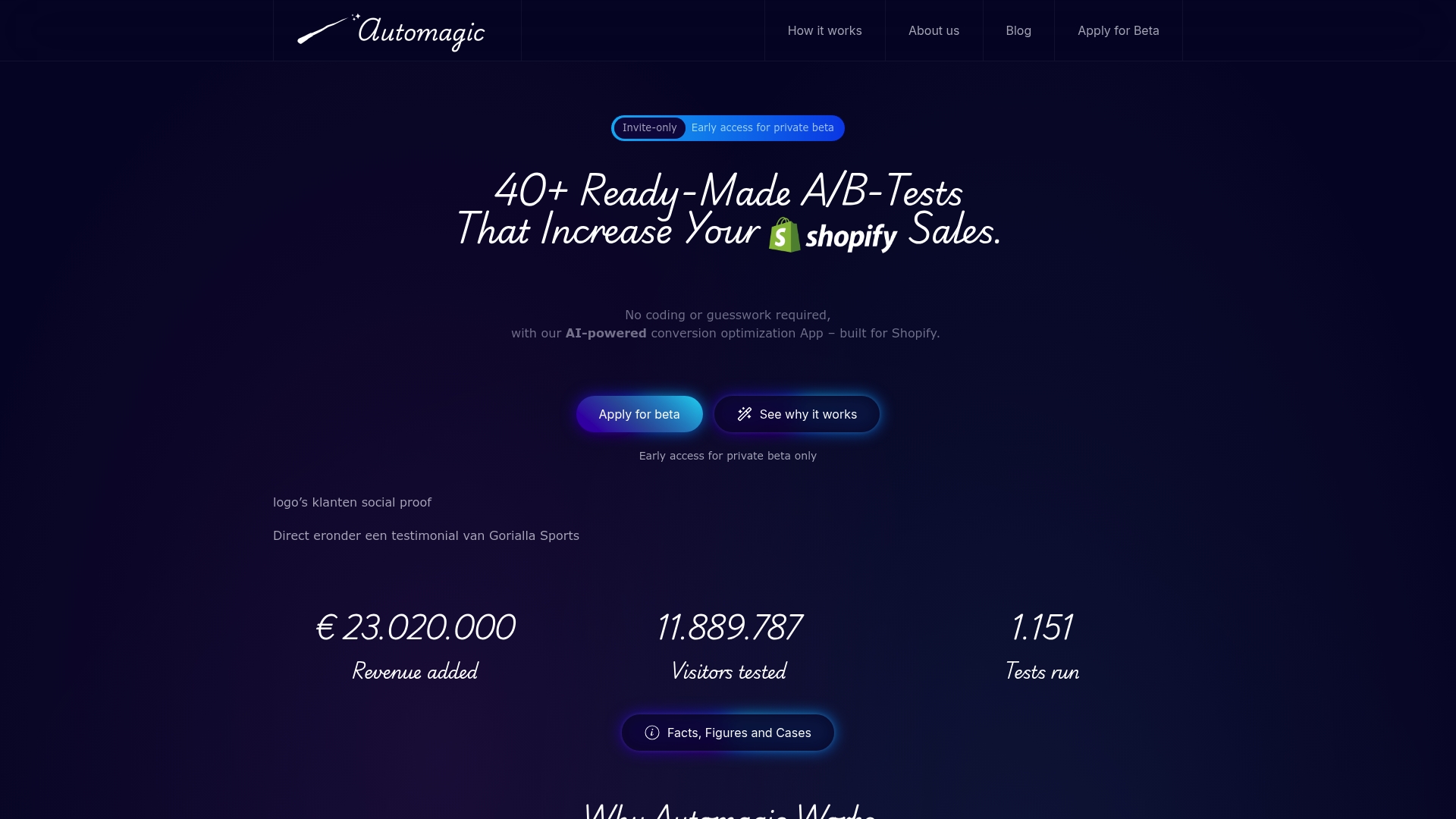
Discover how easy it is to boost conversions by visiting Automagic.li now. Explore the smart, no-code solution that complements your existing Shopify apps and helps you make data-driven decisions faster. Don’t miss the chance to transform your store into a high-performance sales engine with automated A/B testing tailored for Shopify store owners.
Frequently Asked Questions
What are Shopify Apps?
Shopify Apps are software extensions that enhance and customize online stores on the Shopify platform, allowing merchants to expand their store’s capabilities in areas like marketing, sales, shipping, inventory management, and customer experience.
How do I choose the right Shopify App for my store?
To choose the right Shopify App, identify your specific business needs, evaluate apps through free trials, and consider factors such as app ratings, customer reviews, compatibility, and return on investment.
What types of features should I consider when selecting Shopify Apps?
When selecting Shopify Apps, consider features like ease of installation, user interface, compatibility with existing systems, customer support quality, and whether the app includes capabilities for analytics and automation.
How does AI-powered optimization enhance Shopify Apps?
AI-powered optimization improves Shopify Apps by providing data-driven insights and predictive analytics to enhance customer experiences, optimize pricing strategies, and personalize marketing efforts, ultimately driving higher conversion rates.
Recommended
- Shopify Optimization Strategies: Maximize Store Conversions – Automagic
- 2026 update: Top A/B Testing App for Shopify Stores: Boosting Conversion in Ecommerce – Automagic
- Shopify Analytics Explained: Complete Guide for 2025 – Automagic
- Step-by-Step Guide to A/B Testing Shopify for Growth – Automagic
- Different Categories of Perfume: Comprehensive Guide