
Increasing Revenue With A/B Tests: Proven eCommerce Gains
Every American Shopify store owner wants an edge in the crowded world of eCommerce. Yet, only about 22 percent of companies are satisfied with their conversion rates, highlighting just how challenging meaningful growth can be. Understanding the core concepts of A B testing arms you with practical ways to fine-tune your site, make better decisions, and unlock results that actually move the needle for your business.
Table of Contents
- A/B Testing for Shopify: Core Concepts
- Types of Revenue-Impacting A/B Tests
- How AI Enhances Shopify Test Results
- Implementing No-Code A/B Tests Efficiently
- Risks, Costs, and Common Mistakes
Key Takeaways
| Point | Details |
|---|---|
| Understand A/B Testing Fundamentals | A/B testing is essential for optimizing Shopify stores through data-driven insights, enhancing conversions and improving user experience. |
| Focus on Key Testing Areas | Prioritize testing elements like product page layouts and call-to-action buttons to maximize conversion impacts. |
| Leverage AI for Improved Results | AI enhances A/B testing efficiency and accuracy by providing real-time insights and adaptive user allocation. |
| Implement No-Code Testing Solutions | No-code platforms simplify A/B testing, enabling store owners to execute tests without technical expertise, leading to faster, actionable insights. |
A/B Testing for Shopify: Core Concepts
A/B testing represents a strategic approach to optimizing online stores by systematically comparing two versions of a webpage or design element to determine which performs better. For Shopify store owners, this method provides a data-driven pathway to increase conversions, improve user experience, and ultimately drive revenue growth. Understanding the fundamental concepts of A/B testing allows entrepreneurs to make informed decisions about their digital storefront.
The core mechanics of A/B testing involve creating two distinct versions of a specific element – version A (the control) and version B (the variant). These versions are randomly presented to different segments of your website visitors, with key performance metrics tracked to determine which version generates superior results. Metrics might include click-through rates, purchase completions, time spent on page, or overall revenue per visitor. By carefully controlling the testing environment, store owners can isolate the impact of specific design changes and make data-backed optimization decisions.
Successful A/B testing for Shopify stores requires strategic planning and attention to key elements. Potential testing areas include:
- Product page layouts
- Call-to-action button colors and text
- Pricing presentation
- Product image arrangements
- Checkout process design
- Navigation menu structures
Pro Tip for Shopify Success: Start with one variable at a time and run tests long enough to collect statistically significant data, typically 2-4 weeks depending on your store’s traffic volume.
Types of Revenue-Impacting A/B Tests
A/B testing offers Shopify store owners multiple strategic approaches to optimize revenue generation through systematic experimentation. Different testing methodologies enable entrepreneurs to uncover nuanced insights about customer behavior, design preferences, and purchasing triggers that directly impact bottom-line performance.
The primary revenue-impacting A/B tests for Shopify stores typically focus on critical conversion elements. These include pricing strategy tests, which examine how different price presentations influence customer purchasing decisions, and checkout flow tests that analyze how page design modifications can reduce cart abandonment rates. Product page tests are particularly powerful, allowing store owners to experiment with image placement, description formatting, and call-to-action button designs that can significantly enhance user engagement and sales potential.
Key revenue-driving A/B test categories include:
- Pricing Structure Tests
- Comparative pricing displays
- Discount presentation formats
- Bundled versus individual product pricing
- Conversion Optimization Tests
- Call-to-action button colors and text
- Product page layout variations
- Shipping information presentation
- User Experience Tests
- Checkout process simplification
- Navigation menu redesigns
- Product recommendation algorithms
Pro Tip for Strategic Testing: Prioritize tests with the highest potential revenue impact by analyzing your store’s current metrics and focusing on elements most likely to drive meaningful conversion improvements.
How AI Enhances Shopify Test Results
Artificial intelligence has revolutionized A/B testing for Shopify stores by introducing unprecedented precision and speed to conversion optimization strategies. Multi-armed bandit testing algorithms enable dynamic user allocation across test variations, allowing real-time learning and optimization that traditional testing methods cannot match.
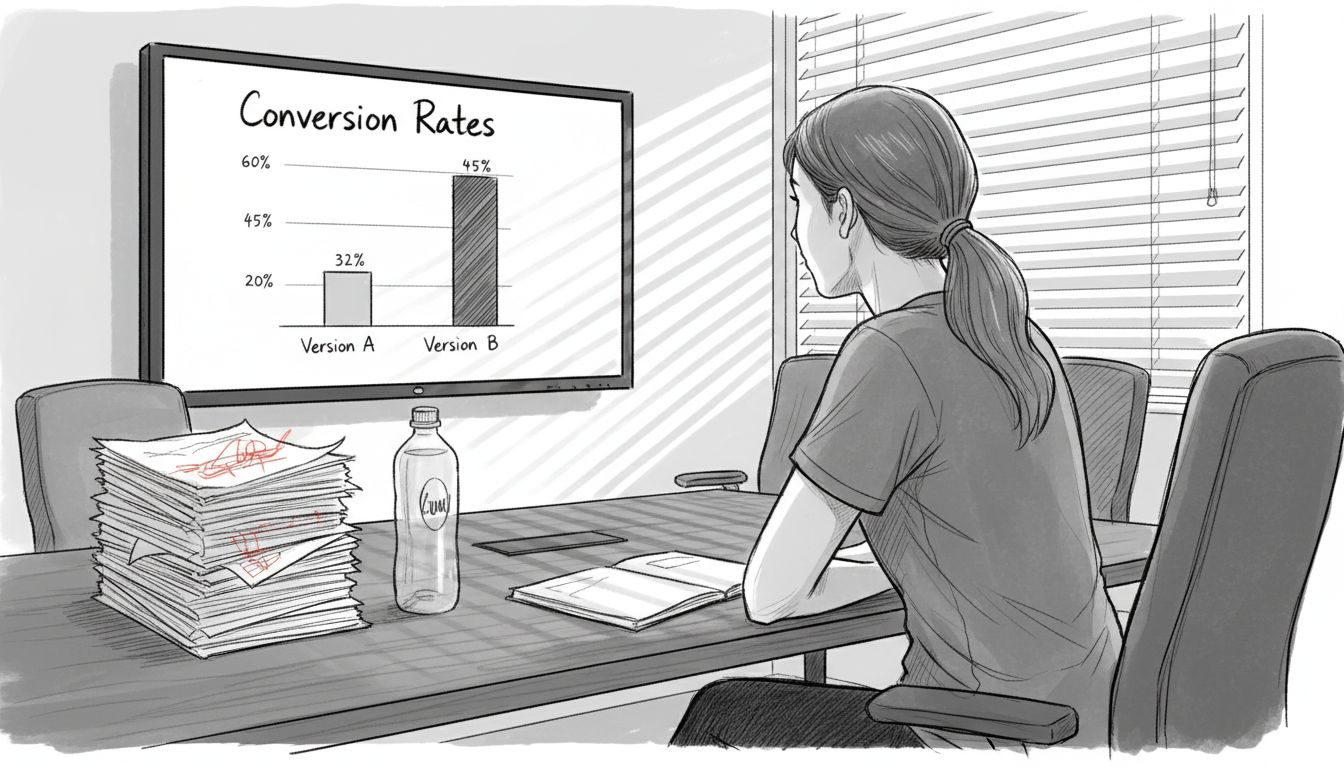
AI-powered testing tools fundamentally transform how Shopify entrepreneurs approach conversion rate optimization. These intelligent systems analyze vast amounts of user interaction data, identifying subtle patterns and insights that human analysts might overlook. By continuously learning from user behavior, AI can predict which design variations are most likely to generate higher conversion rates, dramatically reducing the time and resources required to achieve statistically significant results.
Here’s a side-by-side comparison of traditional versus AI-driven A/B testing for Shopify:
| Aspect | Traditional A/B Testing | AI-Driven A/B Testing |
|---|---|---|
| Test Allocation | Even split between versions | Dynamic, learns from results |
| Speed to Insights | Weeks to reach significance | Often days, adapts in real time |
| Human Input | Manual setup and analysis | Automated variation evaluation |
| Scalability | Limited by resources | Scales across many variables easily |
Key AI-enhanced testing capabilities include:
- Intelligent Variation Selection
- Automated design variation generation
- Predictive performance modeling
- Real-time variation ranking
- Advanced User Segmentation
- Demographic-based testing allocation
- Behavioral pattern recognition
- Personalized experience optimization
- Rapid Insights Generation
- Instant statistical significance calculation
- Automated recommendation engines
- Predictive conversion probability analysis
Pro Tip for AI Testing Mastery: Leverage AI testing tools that offer transparent reporting and allow manual override, ensuring you maintain strategic control while benefiting from machine learning insights.
Implementing No-Code A/B Tests Efficiently
No-code A/B testing platforms have democratized conversion optimization for Shopify store owners, eliminating the traditional barriers of technical complexity and expensive development resources. Visual testing tools with user-friendly interfaces now enable entrepreneurs to design, launch, and analyze experiments without writing a single line of code.
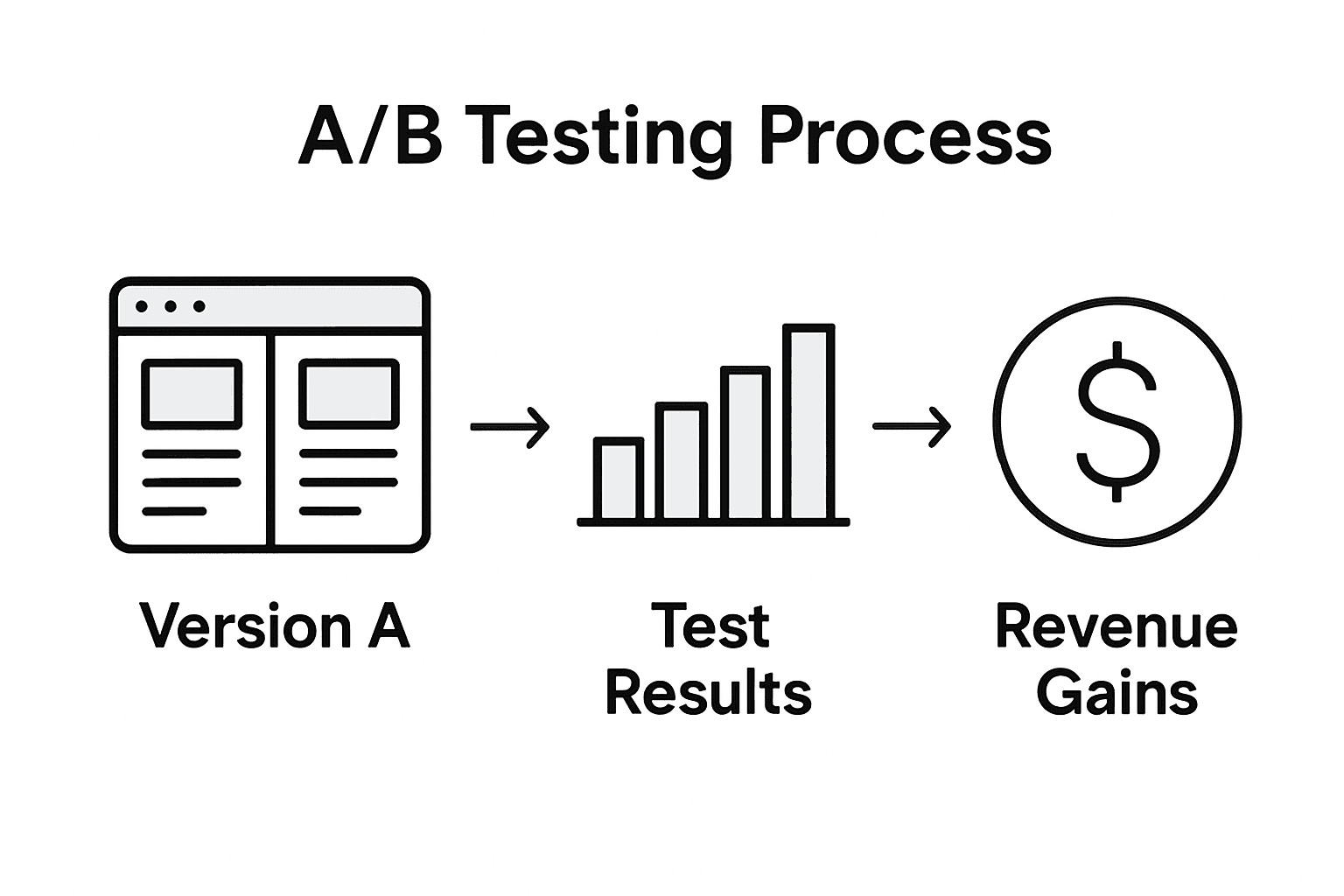
The modern no-code A/B testing approach focuses on intuitive drag-and-drop interfaces that allow store owners to modify webpage elements, create variations, and track performance metrics with minimal technical expertise. These platforms provide pre-built templates, automatic statistical analysis, and real-time tracking, transforming complex optimization processes into straightforward, actionable insights that can be implemented quickly and efficiently.
Key components of efficient no-code A/B testing include:
- Test Design Elements
- Headline variations
- Button color and text modifications
- Image and layout adjustments
- Performance Tracking
- Conversion rate monitoring
- Revenue impact measurement
- User behavior analytics
- Experiment Management
- Automated statistical significance calculation
- Easy variation management
- Quick test deployment
Pro Tip for No-Code Testing Success: Select a no-code A/B testing platform that offers comprehensive analytics, integrates seamlessly with your Shopify store, and provides clear, actionable recommendations based on your test results.
Risks, Costs, and Common Mistakes
A/B testing for Shopify stores involves strategic risks that can significantly impact performance if not managed carefully. Establishing clear testing protocols helps entrepreneurs avoid costly mistakes and minimize potential negative consequences to their online business.
The financial implications of A/B testing extend beyond direct implementation costs. Store owners must consider opportunity costs, potential temporary conversion rate disruptions, and the resources required for comprehensive analysis. Poorly designed tests can lead to misleading conclusions, wasted development time, and reduced user experience if variations are not thoughtfully constructed and monitored.
The following table summarizes key factors affecting the total cost and risk of Shopify A/B testing:
| Factor | Cost Implication | Risk Consideration |
|---|---|---|
| Test Duration | Longer tests require more resources | Short tests risk unreliable data |
| Implementation Complexity | Custom coding raises development costs | Errors can harm user experience |
| Traffic Volume | High traffic enables quicker results | Low traffic may lead to false positives |
| Analysis Accuracy | Professional analysis can be costly | Misinterpretation leads to poor decisions |
Common A/B testing risks and mistakes include:
- Statistical Errors
- Insufficient sample sizes
- Premature test termination
- Misinterpreting statistical significance
- Implementation Pitfalls
- Uncontrolled external variables
- Inconsistent tracking mechanisms
- Overlapping test variations
- Strategic Miscalculations
- Lack of clear hypothesis
- Unrealistic performance expectations
- Ignoring long-term user experience impacts
Pro Tip for Risk Mitigation: Always run tests with a predefined minimum sample size, establish clear success metrics beforehand, and be prepared to halt experiments that show potential negative impacts on overall store performance.
Unlock Your Shopify Store’s Revenue Potential with Smart A/B Testing
The article highlights the challenge many Shopify store owners face in running effective A/B tests that truly drive revenue without technical headaches or wasted time. You want to optimize product pages, checkout flows, and pricing presentation while avoiding common pitfalls like statistical errors and implementation complexity. The goal is to make data-driven decisions that increase conversions without needing advanced coding skills or costly developers.
This is where Automagic.li can transform your approach. Our AI-powered SaaS platform offers a proven, no-code solution that brings precision and speed to your eCommerce testing strategy. Leverage over 40 pre-tested high-impact variations that are prioritized by their potential to boost your revenue. Automagic.li adjusts tests automatically to fit your unique Shopify store design, eliminating manual setup and reducing risk. This means you can confidently run strategic A/B tests that deliver meaningful growth and improved user experience.
Ready to move past guessing and start using A/B tests that really work for your Shopify store?
Discover how easy it is to launch data-backed experiments that increase revenue at Automagic.li.
Take control of your conversion optimization today with AI-driven, no-code A/B testing. Visit Automagic.li now to deploy your first effective test in minutes and watch your Shopify sales grow.
Frequently Asked Questions
What is A/B testing in eCommerce?
A/B testing in eCommerce involves comparing two versions of a web page or element to determine which performs better in terms of conversion rates, user engagement, or other key metrics.
How can A/B testing increase revenue for my Shopify store?
A/B testing helps identify which design elements, pricing strategies, and user experiences resonate most with customers, ultimately leading to optimized conversions and higher revenue.
What are some common elements to test in A/B testing?
Common elements to test include product page layouts, call-to-action button colors and text, checkout process designs, and pricing presentations to see what drives better performance.
How long should I run an A/B test to get reliable results?
It’s recommended to run A/B tests for a minimum of 2-4 weeks, depending on your store’s traffic, to ensure you collect statistically significant data for accurate analysis.